
Open Day

A Full Baseworks Practice Session, One Week Before the Fall Season
September 26, 2026 (Sat)
9:30 AM - 12:00 PM
Mile End, Montreal
Proto Studio
Admission
$20 CAD
Language
English

Baseworks Open Day: A 2.5-hour introduction to the Baseworks Method, built around a full 70-minute guided practice session in the same format as the Fall Practice Sessions. You practice first. Context, programs, and questions come after.

The Baseworks Method is an educational method for developing body awareness and motor control as transferable skills. The practice works with specific forms and precise attention to how you move. If you’re curious about the relationship between movement and perception, this morning gives you direct experience of the approach.

What to Expect

Guided Practice (70 minutes)
A complete practice session, identical in format and length to the Fall Practice Sessions. Guided movement with real-time instruction, working with specific forms and core Baseworks principles, including Distributed Activation and Intensity Modification. This is the actual product of the Fall season, experienced in full: same venue, same facilitators, same Saturday-morning time slot.

Break
Tea in the Proto Studio common area. Time to rest, talk, and ask informal questions.

Re-Encounter: The Same Forms, a Second Time
After the break, we return to a small number of forms from the practice block, add a focused perceptual task, and perform them again. Many participants notice that the same form offers more the second time: more detail, more control, more to observe. This is the premise of the Method experienced within a single morning. The forms stay the same. What you can perceive in them develops with practice.

Programs & Q&A
A short overview of how Baseworks study is structured: the Fall Practice Sessions at Proto Studio and the Baseworks Primer online course. Then open Q&A with the developers, moving into individual conversations

Your Background

Who this is for

The Open Day is open to everyone. You don’t need prior experience with Baseworks or a particular physical background.

Two kinds of participants tend to find it especially useful:

  • People who already work seriously with their body (dance, martial arts, circus arts, physiotherapy, athletics, and similar disciplines) who are considering the Fall Practice Sessions and want to experience the format before booking.
  • People newer to structured movement study who are curious about the Method and want direct experience before deciding how to begin, whether with the online Primer course, the Practice Sessions, or both.

By the end of the morning, you’ll have a clear sense of which starting point fits you, and you’ll be able to talk it through with us directly.

See the detailed FAQ below for specific questions about health conditions, age, experience level, and how Baseworks relates to other practices.

Why Attend

Why Attend

Experienced the Baseworks Method firsthand
01

Experience a full practice session

The 70-minute practice block is a real session in the Fall Practice Sessions format. By the end of it, you’ll know how the Method works in practice and whether it aligns with how you like to learn.

02

Observe your own perception change

The re-encounter block is built to let you observe, within one morning, how repetition changes what you can perceive in a movement. This is the central idea behind sustained Baseworks practice, and it’s something you can only verify on your own body.

03

Meet the key people behind the method

The session is facilitated by Patrick Oancia (method founder) and Asia Shcherbakova (neuroscientist, director of research), who have decades of experience teaching this approach to movement education.

Why Attend

What Learners Say

What I appreciate about Baseworks is how its methodology resonates logically with me, promoting a sense of autonomy in my practice that I find deeply satisfying. There's a distinct sense of professionalism. Everything feels polished and well-designed.
Hirotaka
Entrepreneur | Japan
I feel like I'm learning something new in every session. I get so many more dimensions in every exercise that we do. Sometimes, it's really the small movements that make the difference. And that feeling of realizing something is very good!
Mirjana
Change & Leadership Manager, IKEA | Sweden
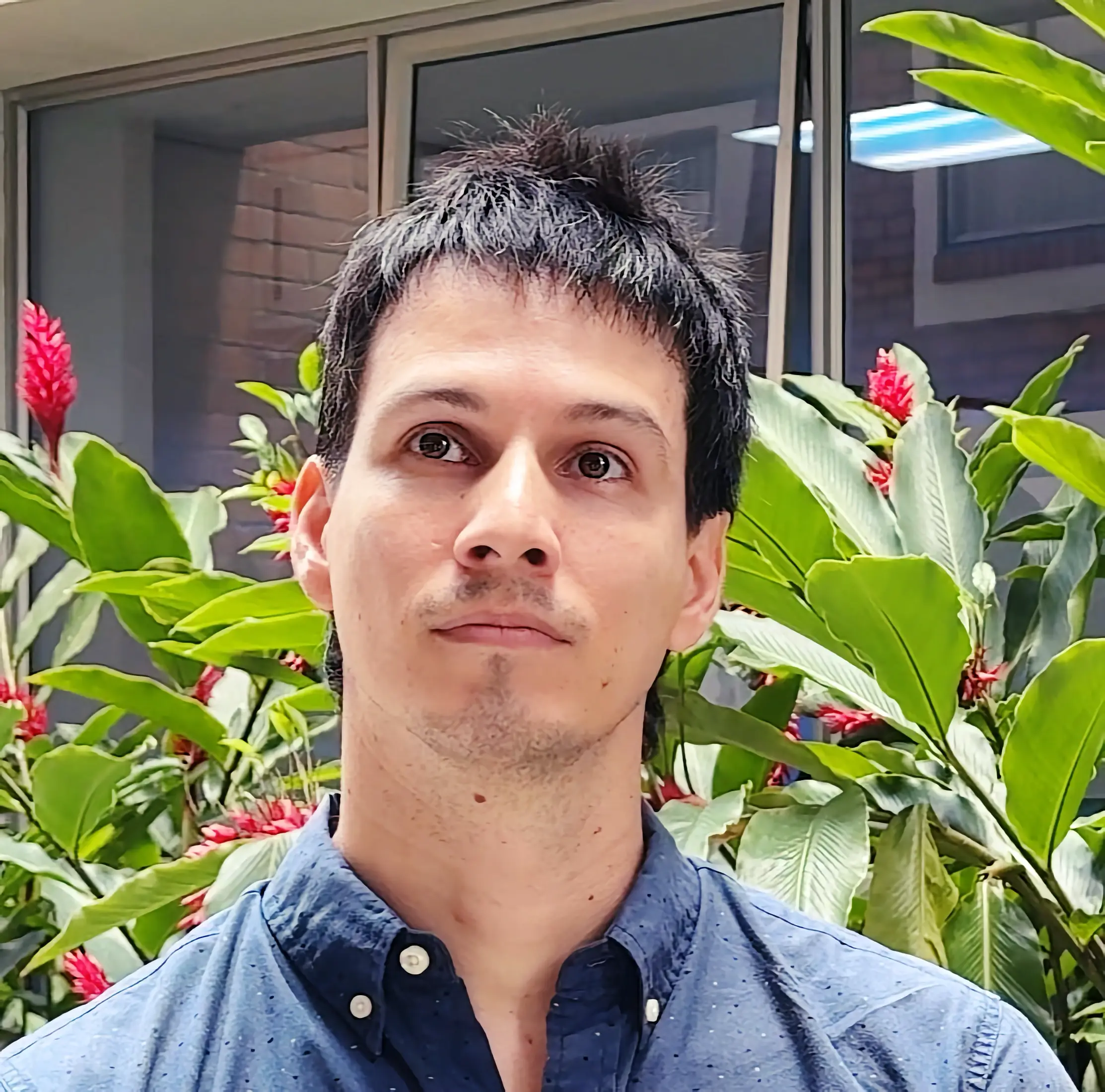
The Baseworks principle of managing intensity with its practical application can help entrepreneurs in life and other domains. I was fascinated by this transference.
Gustavo
Professor of Ethical Entrepreneurship | Colombia
From athletic performance to workplace interactions and stress management—the importance of understanding personal limits and intention has improved my physical awareness and mental well-being.
Krister
Strategic Manager, Ericsson | Sweden
On body awareness, focus, and learning to effectively relieve tension and sciatica
Althea (Canada | coder, videographer, skateboarder)
On adopting a holistic, long-term approach to physical well-being, enhancing comfort, and opening the mind to sustainable practices
Morten (Denmark | Google Cloud project manager, former professional footballer)
On the impact of developing body-awareness through embracing gradual progress, accepting limitations, and maintaining patience while learning and growing at one's own natural pace.
Daria (United Kingdom | Journalist, Digital Producer)
Facilitators

Who You Will Work With

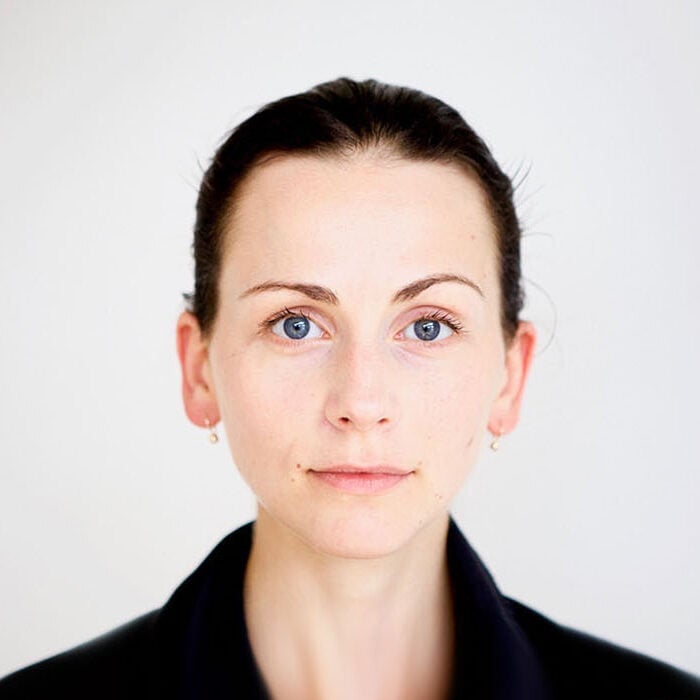
Asia Ksenia Shcherbakova

Neuroscientist, educator, and director of research and curriculum of the Baseworks Method. Asia specializes in translating complex interdisciplinary concepts into practical learning experiences, bridging neuroscience research with embodied practice.

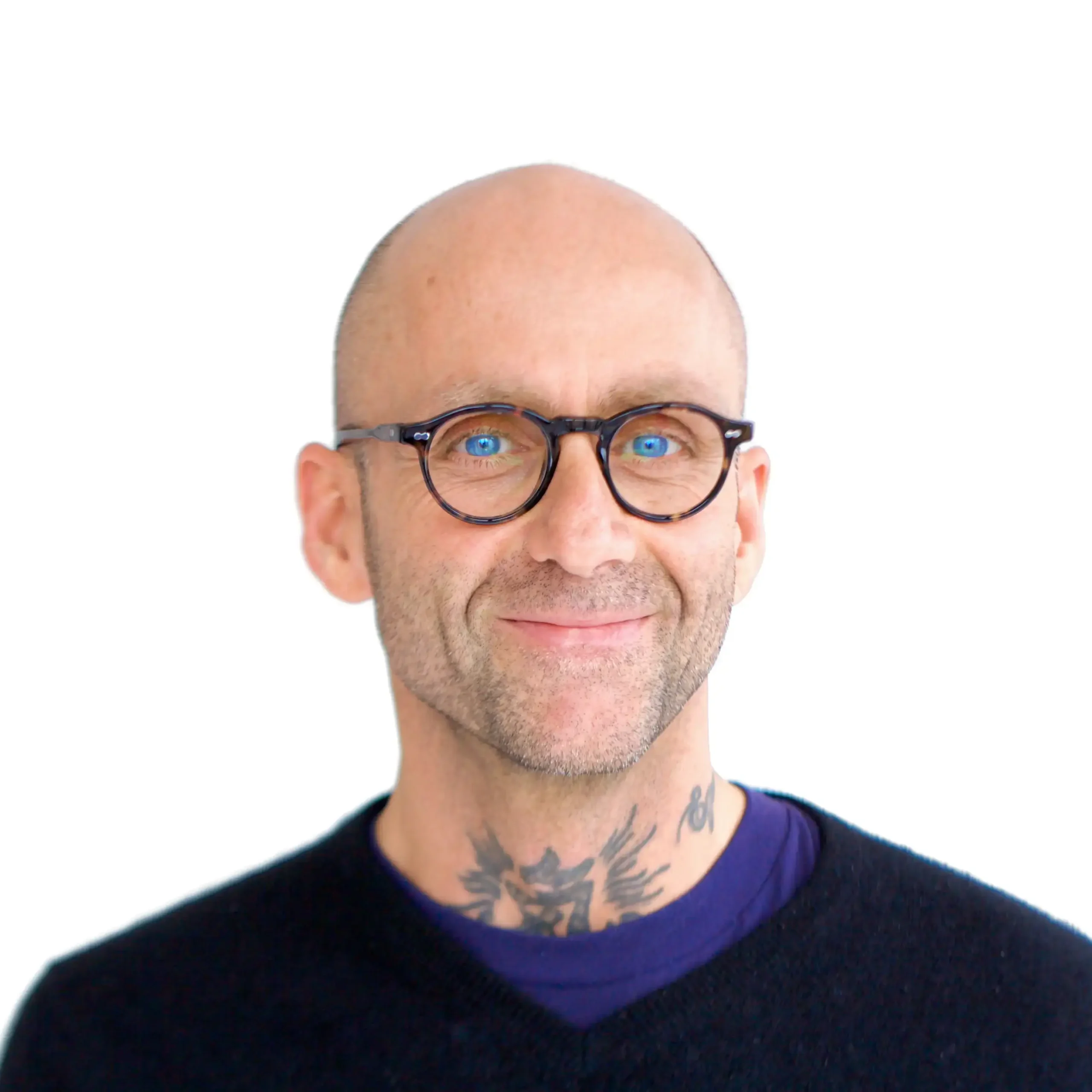
Patrick Oancia

Founder of the Baseworks Method. With a background spanning athletics, music, visual arts, and education, Patrick has developed an approach to training physical and perceptual skills that has influenced practitioners across diverse fields.

NEXT STEPS

Continuing After the Open Day

Baseworks study in Montreal this fall is structured around two programs. They work independently, and they work together.
Fall 2026 · Proto Studio

Practice Sessions

Eight sessions of guided practice. Saturdays, October 3 through November 21, at the same studio and in the same format as the Open Day practice block. 70 minutes per session, for Baseworks alumni and people who already work seriously with their body.

Attending the Open Day counts as your introductory session, so ongoing booking at standard rates opens to you directly.

Online · Self-Paced
A structured online course covering the concepts and movement vocabulary of the Method: the theory behind everything you experience in the studio. Study at your own pace, anywhere.
One or Both?
HYBRID
It depends on your background and how you learn. Practitioners with an extensive physical background often absorb the principles directly through the Practice Sessions. People with less movement experience often get more from the sessions when the Primer runs alongside them, since it carries the conceptual groundwork. The combination of the two is the fullest version of studying the Method in Montreal this season. The Open Day is the place to figure out which configuration fits you, and we’ll gladly give you our honest read.

Register to Join

  • $20 CAD per person.
  • Registration closes when capacity is reached.
  • We are not accepting walk-in registrations on the day of the event.
  • By registering, you agree to our participation terms. We do not share your information.
September 26 Open Day
September 26, 2026 | 9:30 AM – 12:00 PM

Booking Closed

Venue

Proto Studio  | 5333 Av. Casgrain, suite 1107, Montréal (Mile End)

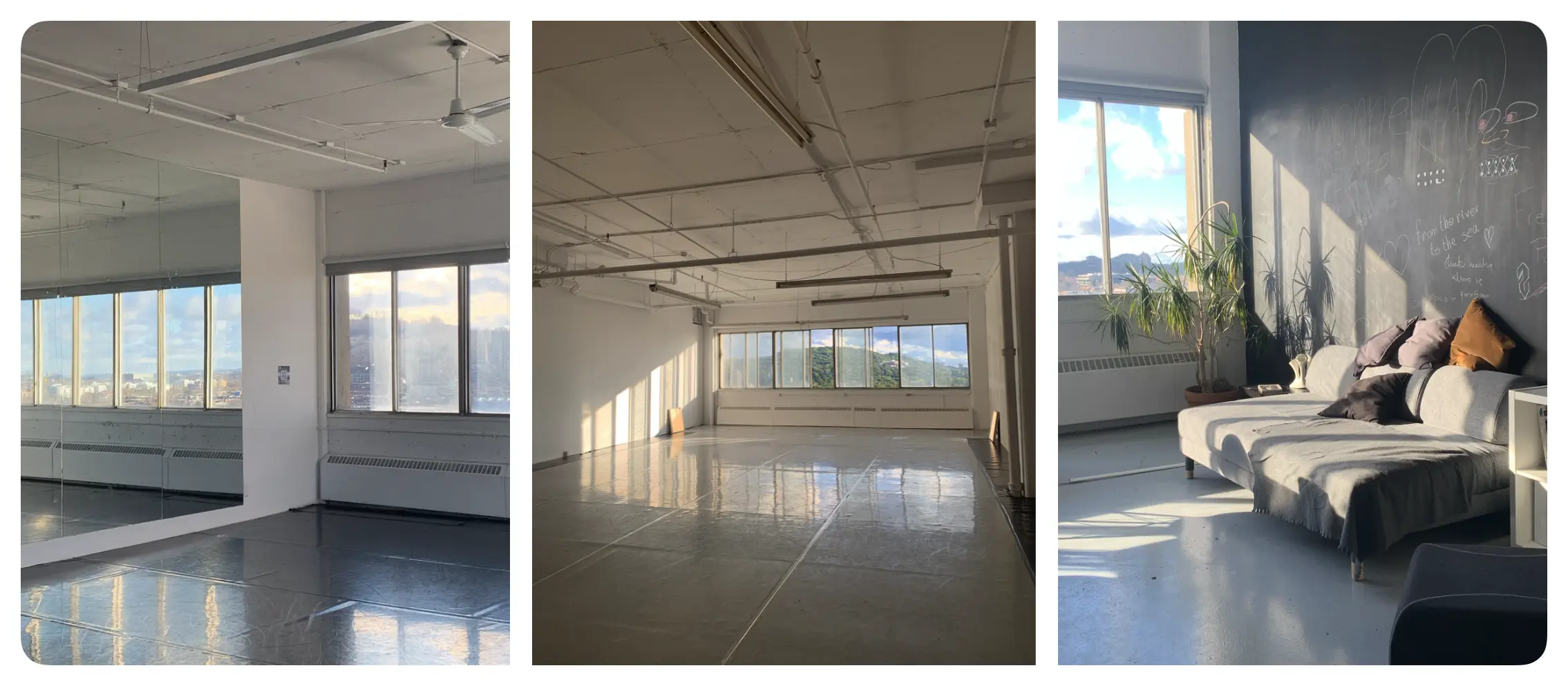
Proto Studio is a creative residency space in Mile End dedicated to movement education, performance, and community. The studios are on the 11th floor, with natural light and views of Mont Royal. A comfortable common area is available before and after the session, and it’s where we’ll gather during the break.

Access details are sent upon registration confirmation.

FAQ

About The Method

Physical therapy treats injuries or conditions, typically with prescribed exercises targeting specific issues. Baseworks teaches skills: how you organize movement throughout your entire system, how compensation patterns develop, how you distribute effort, how attention affects motor control.

Many people dealing with chronic tension or old injuries find the Method helpful, because they develop better movement strategies. The skill development often brings relief, and relief is a common outcome rather than the stated goal.

If you have acute injuries or medical conditions requiring treatment, address those with appropriate healthcare providers first. Our approach is educational. Once you have medical clearance to move, it often complements whatever treatment you’ve received.

Physical therapy treats injuries or conditions, typically with prescribed exercises targeting specific issues. Therapists diagnose problems and design interventions to address them.

We don’t treat conditions. We teach skills. The distinction matters:

A physical therapist might give you exercises to strengthen a weak hip or mobilize a stiff shoulder. We teach you to recognize how you organize movement throughout your entire system—how compensation patterns develop, how you distribute effort, how attention affects motor control.

Many people dealing with chronic tension or old injuries find the method helpful, but that’s because they’re developing better movement strategies, not because we’re providing therapy. The skill development often leads to relief, but relief isn’t the primary goal.

If you have acute injuries or medical conditions requiring treatment, address those with appropriate healthcare providers first. Our approach is educational, not therapeutic. Once you have medical clearance to move, this systematic approach often helps you develop sustainable strategies that complement whatever treatment you’ve received.

We teach through a defined set of principles and concepts that apply consistently across all movements: Distributed Activation (engaging multiple body parts simultaneously), micromovements (working with minimal displacement to develop precision), fixing, separating, and isolating (distinguishing types of muscular engagement), Intensity Modification (modulating effort based on capacity), and several others.

These are specific, observable aspects of how movement works that you can learn to recognize and apply. The Method is systematic because these principles connect logically and build on each other: there’s a clear pedagogical progression.

Movement is fundamentally a brain function: perception and action are inseparable. How you practice movement affects how you process information, make decisions, and manage attention.

Co-developer Asia (Ksenia) Shcherbakova’s neuroscience background informs how we think about motor learning, neuroplasticity, and sensorimotor integration. We draw on research about how movement affects cognitive function, and we keep our claims grounded in what we actually observe.

The Method develops more refined spatial awareness, proprioception (sense of body position), and interoception (sense of internal state), which are fundamental to how you interact with the world. Many practitioners notice effects beyond physical coordination: improved focus, better stress regulation, steadier attention.

In our formulation, physical intelligence is the capacity to perceive, process, and act on information from your body. It includes awareness of position and movement (proprioception), internal states like tension or fatigue (interoception), and the ability to organize movement efficiently for different contexts.

Like other forms of intelligence, it can be systematically developed through appropriate training. The Baseworks Method is designed specifically for this—training perception and motor control as learnable skills rather than innate qualities.

About The Open Day

Yes. Practice Sessions normally begin with a single introductory session for people new to Baseworks. Attending the Open Day fills that role: afterward, ongoing booking at standard rates opens to you directly.

Yes. The Open Day is open to everyone, and the practice adapts to your current capacity. If you’re newer to structured movement study, the Open Day is also the best way to figure out your starting point: for many people that’s the Baseworks Primer, the online course that carries the conceptual foundation of the Method, on its own or alongside the Practice Sessions.

No. If you have a Baseworks history or an established physical background, you can go through the intake form on the Practice Sessions page at any time. The Open Day is the most direct way to experience the format first, and it replaces the introductory session in the pricing structure.

As per our regular terms, we generally don’t offer refunds. 

Practical Questions

No. We work with people across a wide range of physical backgrounds: former athletes, people who’ve never been particularly active, dancers, yoga practitioners, complete beginners.

The Method adapts to your current capacity. You need to be able to stand without support and get up from the floor independently. Beyond that, your starting point is your starting point. We teach you to work intelligently with whatever capacity you currently have.

Many people who practice with us are dealing with chronic issues: old sports injuries, desk-related tension, postural problems. Many find improvement, because they develop awareness and control rather than receiving treatment.

If you have acute injuries or conditions requiring medical attention, address those first. If you have chronic issues and medical clearance to move, this approach often helps people develop better strategies for managing discomfort.

If you have specific concerns, contact us before the session so we can discuss whether the Open Day is appropriate for your situation.

With this being said With this being said, we always emphasize that we would like our learners to consider Baseworks an educational modality rather than a therapeutic modality. we always emphasize that we would like our learners to consider Baseworks an educational modality rather than a therapeutic modality.

Yes. We work with practitioners from their teens through their 80s. Age is less relevant than current capacity and willingness to work with attention and precision.

The practice adapts to whatever mobility, strength, and flexibility you currently have. If you can stand without support and get up from the floor independently, the basic requirements are met.

Comfortable clothes that allow you to move freely and get down to the floor: athletic wear or loose-fitting clothes work well. We practice barefoot or in socks (your choice).

Bring water. You don’t need an exercise mat; the studios have marley floors.

No.

We do not use an exercise mat in Baseworks. You can bring a towel or a small foam sitting pad (like those for hiking or kayaking) if you are worried that contact with the floor may be uncomfortable in some positions.

No. The Method requires direct experience: watching doesn’t convey what the practice involves or whether it will work for you. You’re never expected to perform movements that cause pain, and adapting movements to your capacity is part of what we teach.

We occasionally use partner work (tactile feedback while someone performs a movement), so you’ll be in close proximity with other participants at times. If this format is uncomfortable for you, or if you have specific mobility concerns, contact us before the session.

You will be able to enter the room even if late.

However, the morning is designed as a complete experience. Please arrive on time. If you’re running a few minutes late on the day, send us a message to let us know.

The session is conducted in English. Participants who are more comfortable in French are welcome: we’ll make an effort to explain instructions in French, and clarifications in French are no problem during the Q&A.

In Quebec, participants aged 14 to 17 require parental consent; participants 18 and older can register independently. If you’re between 14 and 17, please indicate your age in the registration notes at checkout and we’ll follow up to obtain parental permission.

Our programming requires sustained attention and focus. If you’re a parent considering registration for your teenager, please consider whether this format suits their learning style, and feel free to contact us with questions.