


Ksenia Asia Shcherbakova (Asia pronounced Asha; birth name Ksenia) was born in Saint Petersburg, Russia. With her father being a physicist, she grew up having immediate answers to all her questions about the world, from subatomic particles to galaxies. This stimulated both her curiosity about the world and the sense that nature was complex but cognizable.
In high school, she took advantage of programs available to young students in Russia to conduct her first genetic experiments, interview psychiatric patients, and observe intensive care units, operating rooms, and autopsies at a hospital morgue. Having been exposed to Eastern philosophy and mythology from a young age through her home library, and having taken Eastern studies as an elective, she was torn between biology and Eastern studies—a tension she resolved in favor of biology, though the integration of both continues to shape her work.
She completed a Master’s degree in Human Genetics at Saint-Petersburg State University. By that point, her research was in an interdisciplinary area of psychoneuroimmunogenetics, marking the beginning of her shift toward Neuroscience. She joined the Laboratory of Neurobiology of Integrative Functions of the Brain at the Pavlov’s Department of the Institute of Experimental Medicine to participate in research related to the role of inflammation in the development of mild cognitive impairment. After an internship at the Brain Research Institute of Niigata University, she was inspired to do her PhD in Japan.
Alongside her biological study and research, she taught herself Japanese by translating 100 songs from the Tokyo rock band PENICILLIN using a dictionary and textbook. She also trained in classical music for severn years (flute in piano).
She chose a biotechnology PhD program at Kyoto Sangyo University, focusing on bacterial systems to study the molecular mechanisms of adaptation and survival. Living for 4 years in the mountains in Kyoto, with more than 1600 Buddhist temples and 400 Shinto shrines, her interest in Eastern thought has found a concrete object of study: the life path and thinking of Kūkai and the Shingon ‘school’ of buddhist thought that he had developed, in which she was able to find the closest fit between natural sciences and systems of spirituality.
During her PhD, a health challenge led her to design a neuroscience-based intervention for herself, combining metabolic approaches (ketogenic diet, medium-chain triglycerides) with sensorimotor training. Successfully resolving this through self-directed research deepened her interest in the mechanistic relationships between motor and non-motor cognitive functions.
After obtaining her PhD, Asia worked as a consultant for a Tokyo-based company specializing in talent management and organizational development, where she designed neuroscience-based training materials for their programs.
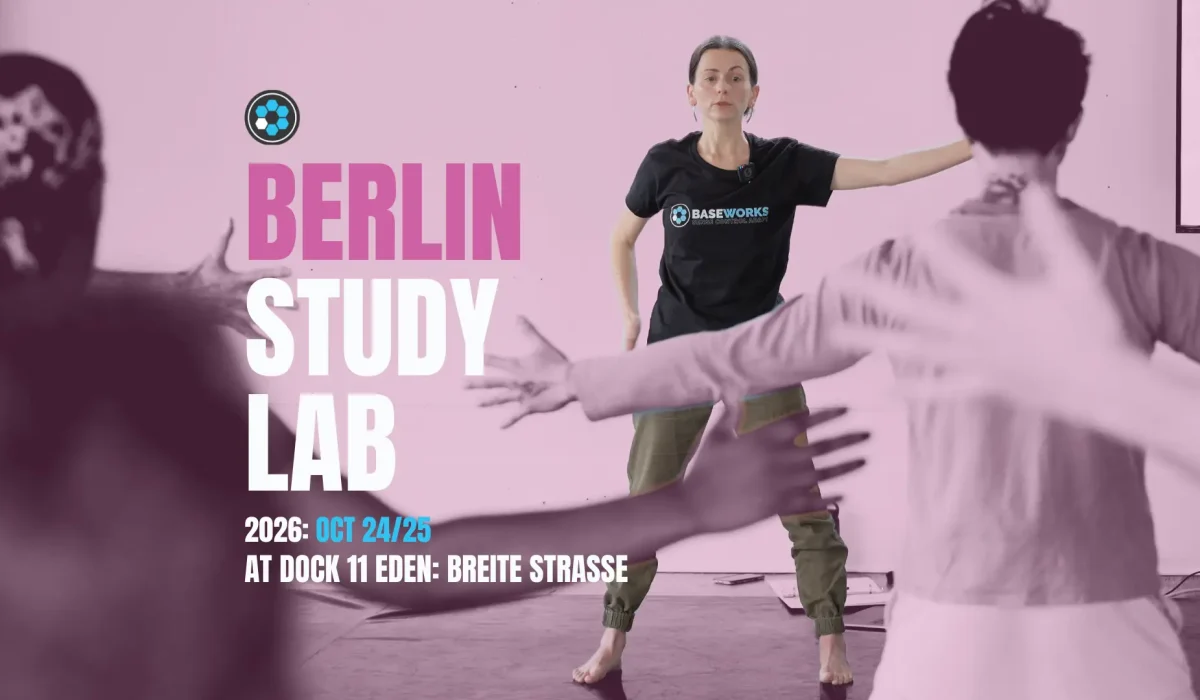
Soon after relocating to Tokyo, she was introduced to Baseworks. Despite being in excellent health and having no therapeutic needs, she was intrigued by unexpected perceptual changes triggered by the practice—experiences that didn’t clearly map onto either common sensorimotor neuroscience models or common applications in the fitness/wellness/mindfulness sector. This intellectual puzzle led her to leave her consulting role and join Baseworks as a science consultant to investigate these phenomena and “reverse engineer” the method.
She designed various frameworks to highlight the salient features of the Baseworks method as a training modality, such as the the key movement principles and the 3 types of body awareness, with their practical applications visualized in the Baseworks Meta. Certain findings with implications for fundamental science were recently reported at two international neuroscience conferences (1, 2).
At the same time, she was also seeking correlates in existing scholarship for the more abstract facets of Baseworks, which founder, Patrick Oancia, has always emphasized were of equal importance to the physical characteristics. This line of her research appears in her lectures, and can be traced in her podcast appearances, as well as her commentary pieces on the Baseworks Transmission podcast.
Asia’s research also extends into linguistics and philosophy of language, examining how physical movement, conceptual thought, and linguistic expression function as integrated cognitive processes. This work draws on her experiences with multilingual instruction, translation of complex concepts between Japanese and English, and the embodied semantics and pragmatics of movement communication. She occasionally delivers lectures exploring these connections and continues developing this research through Baseworks and interdisciplinary collaborations.
Alongside her work with Baseworks, Asia participates in an ongoing research project focused on the mechanisms of the neuroprotective actions of medium-chain triglycerides. Her publications can be found here under her birth name, Ksenia Shcherbakova.
Asia is currently based in Montreal, Canada.