
I learned to pay attention on a bicycle.
My bicycle club mates were older than me. They were more like friends and mentors than peers. A good part of what held us together out on the road was their company. The rides were long and tough. There were mornings when all that I could feel was the effort that was going in.
Then something would shift. Not on every ride, but often enough that I started to recognize it. The effort was still maxed. The climbs were still climbs, but the pain settled into the background. What took its place was a narrow, complete attention. I could feel the texture of the pavement reverberating through the steel frame. I noticed the light changing as the sun dropped behind the tree line. The trees along the road became something I was riding through and alongside.
The rides I remember most clearly weren’t the fastest. They were the ones where my attention opened up while my body kept working at its edge.
It took me a long time to understand what was actually happening on those mornings. I was sensing more, and because I was sensing more, I could negotiate with the difficulty differently. I started to moderate it. I could find a cadence that was sustainable instead of forcing one that wasn’t. The limit didn’t go away. My relationship to it changed.
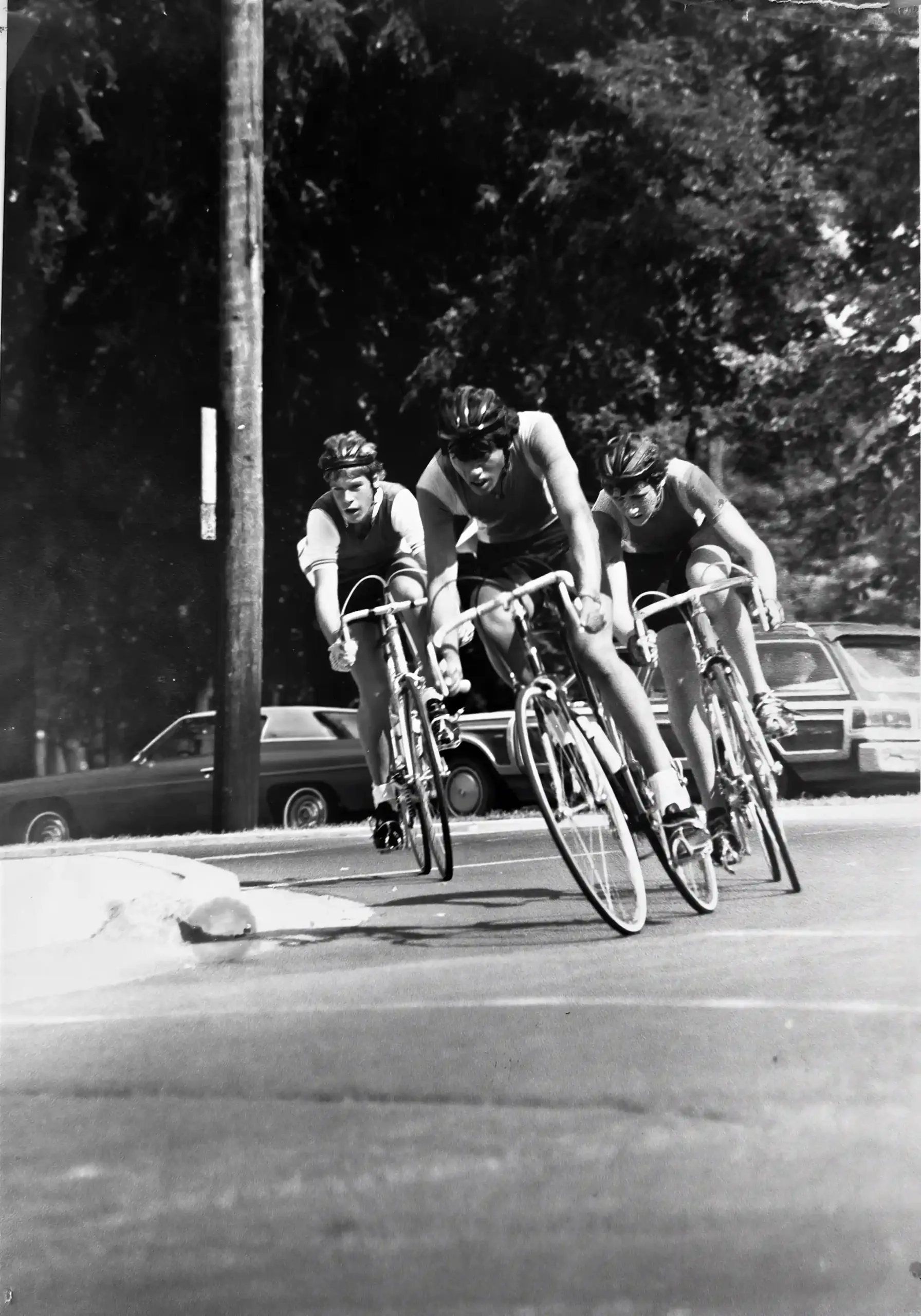
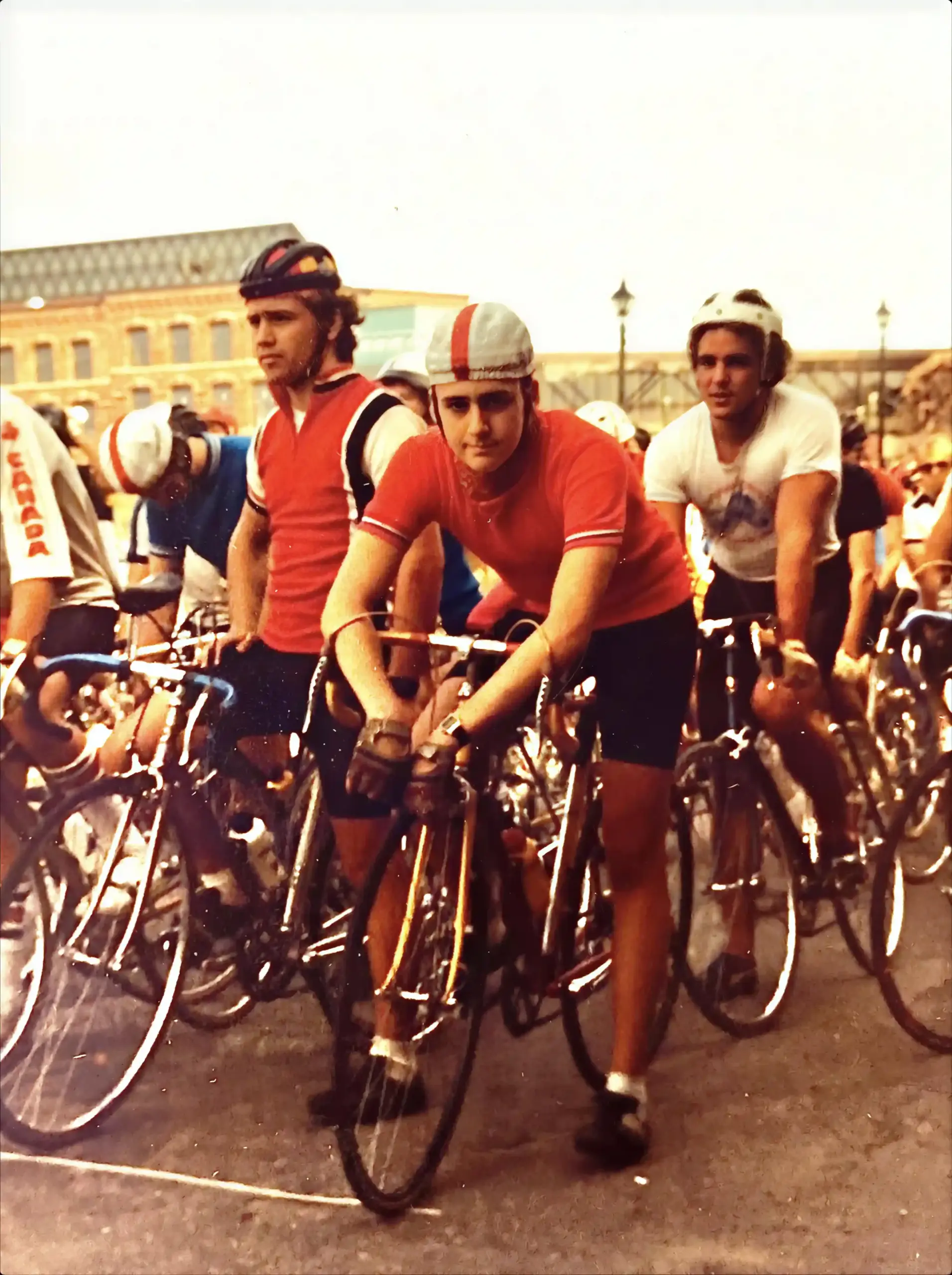
Racing in Halifax, Nova Scotia, Canada, 1979, and at the start line in Moncton, New Brunswick, Canada, 1980. Photos: David Oancia.
On a board
Skateboarding and snowboarding came next, and the stakes went up considerably. A demanding training session on the bike could leave you physically depleted. A bad fall on a skateboard or snowboard could really hurt you. The risk was more direct: velocity, momentum, and gravity working against a few inches of board, and a person who had to read all three at once.
The same shift showed up there too. When I was working on a trick, or trying to get better at anything, there was a point where the form took over. The board stopped being something I was riding and started to feel like part of my own body. The space I was in (a set of stairs, a curb, a forest with trees in the backcountry) stopped being an obstacle course and became part of that same extension, because I’d gotten familiar enough with it to sense it instead of just looking at it.
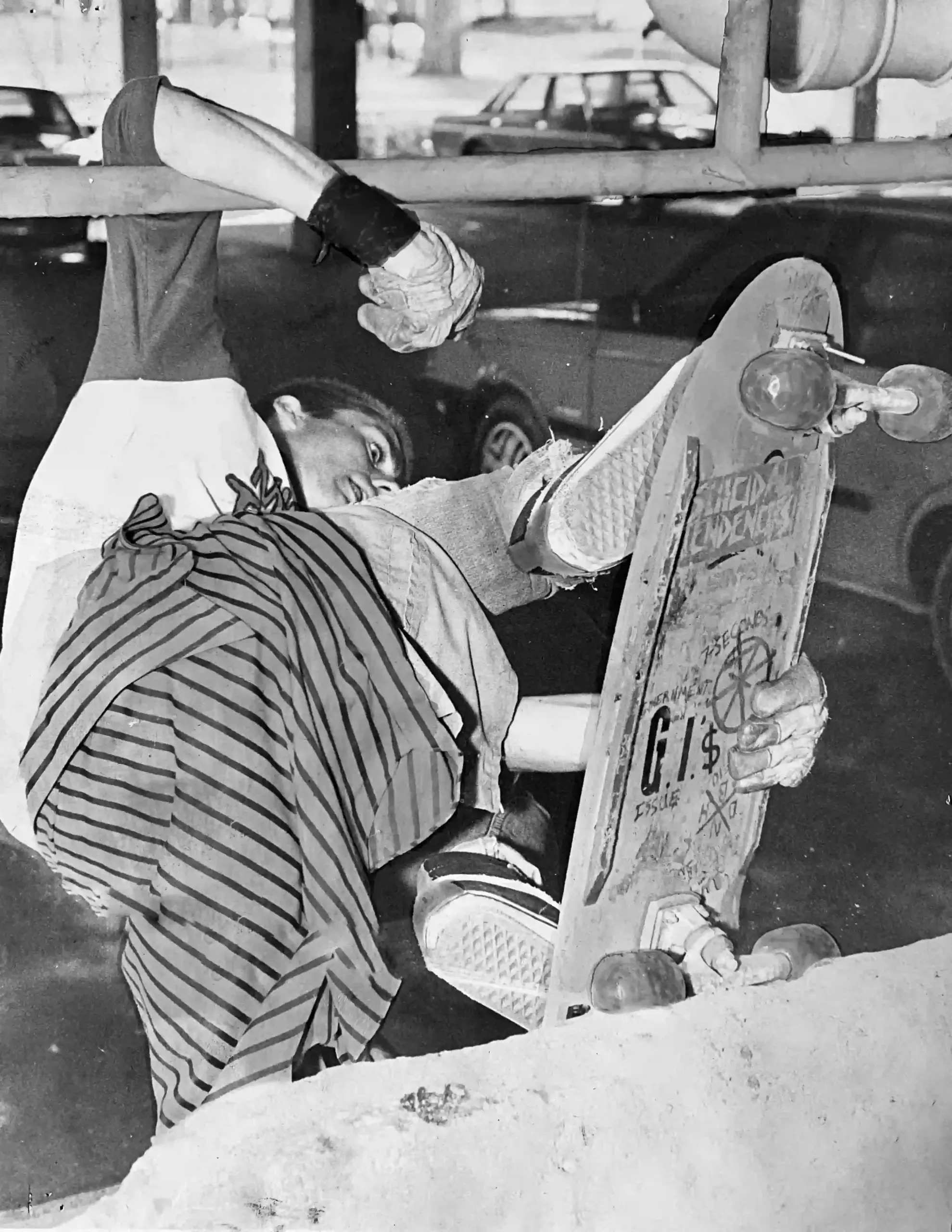
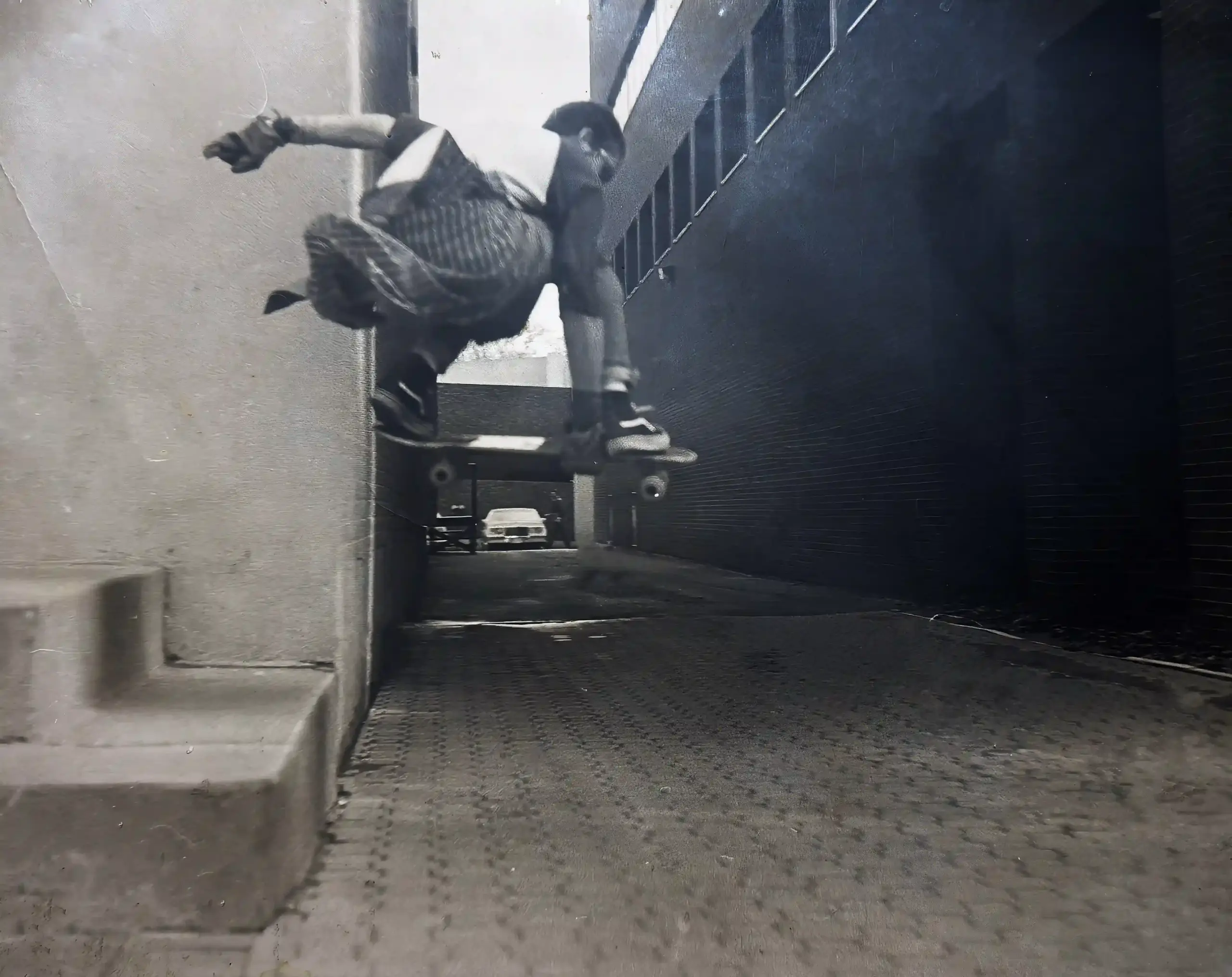
Skateboarding in Fredericton, New Brunswick, Canada, 1983. Photos: Jeff Smith.
I’ve spent the years since then as a musician, and then building a multifaceted movement practice. The same shift keeps showing up. Getting past a limit is a byproduct of time spent in any practice. What matters more is what happens on the other side of that shift: the chance to work inside the limit and notice what’s actually there.
On stage
The first place I noticed it again was on stage.
I came to music as a vocalist, and later I also played guitar. When I was on stage, I thought very little about how I looked. That might come across as confidence, but it was something else surfacing. There’s a point when you stop thinking about the lyrics and what you rehearsed, and what’s left is the meaning of the song. You stop performing it. You’re inside it. The expression becomes its own kind of release, and the crowd is part of that: people in the same room as the thing you’re all paying attention to.
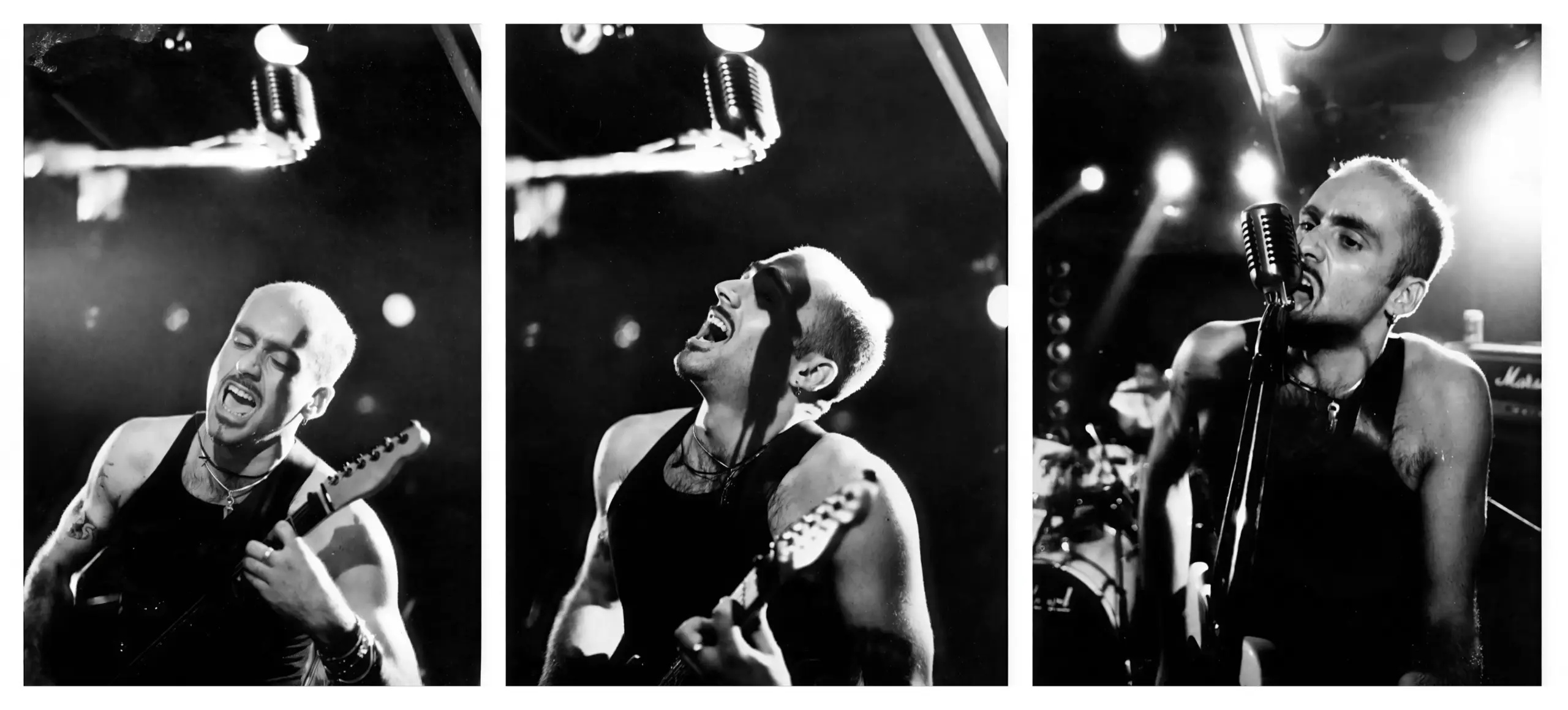
On stage with Death Comes Spring, Niigata, Japan, 1994. Photo: Peter M. Cook.
On the bike my attention had opened outward, into the environment that I was riding in. On stage it turned inward, into the song and what it was doing in me. The same experience, pointed in different directions. Both were about sensing more than I usually did, and letting that change what I could do.
The same chord, heard five ways
Years later I came across a short clip that put the idea in front of me.
The musician Jacob Collier was asked to explain one thing, harmony, at five levels, to five different people: a child, a teenager, a music student, a professional, and finally Herbie Hancock. What you watch, over about fifteen minutes, is the same thing being heard in completely different ways depending on who’s listening. The child hears it and says it’s “when people sing together and it sounds nice.” Collier tells her she’s a hundred percent correct, and she is. The teenager hears major and minor as two moods, one bright and one dark. By the time Collier gets to Herbie Hancock, the two of them are talking about directions. “Where am I right now,” Collier says, moving through a chord, “my job is to get back home.” A chord, to them, is a place with a pull toward somewhere else.
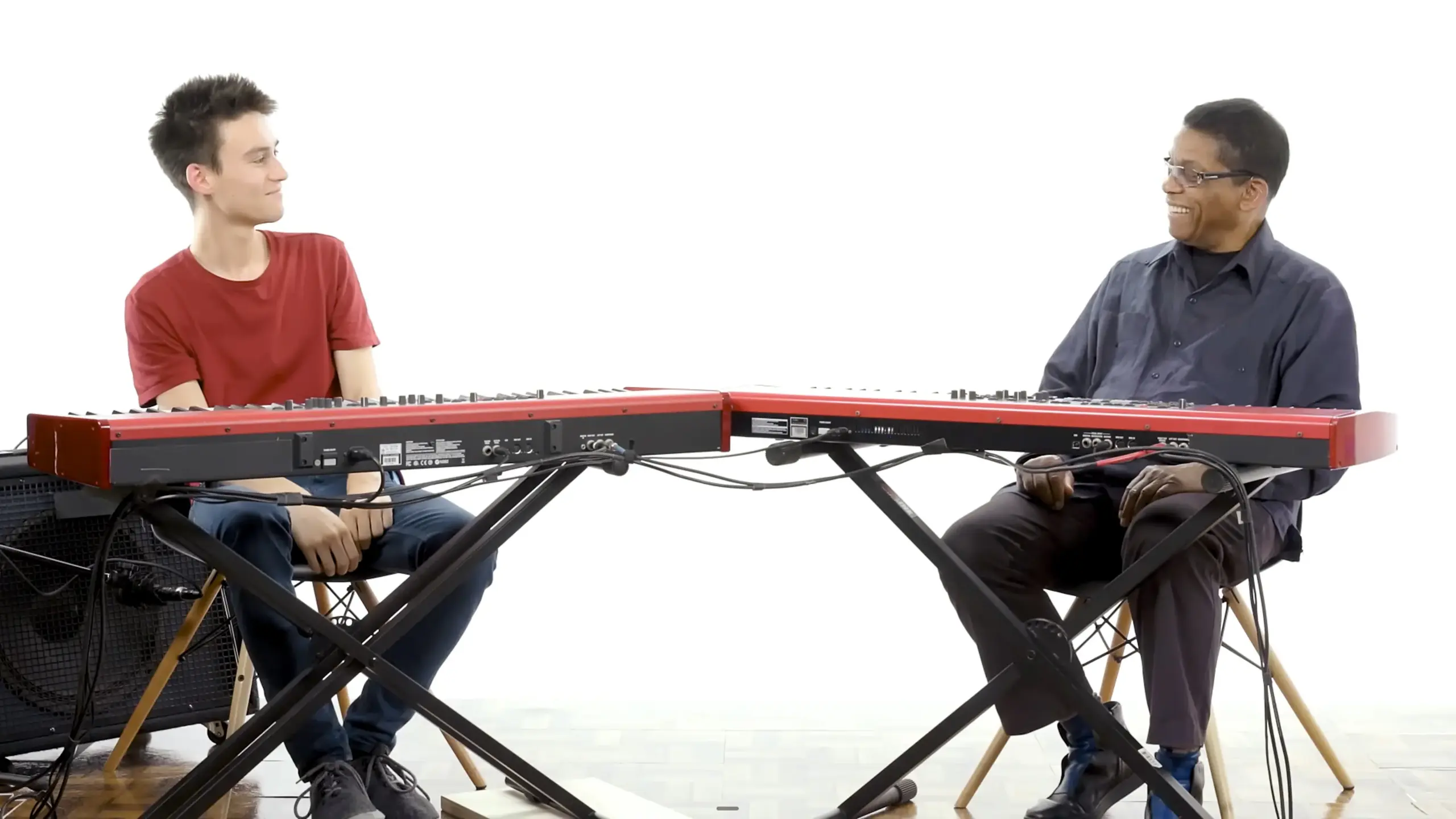
Jacob Collier and Herbie Hancock discussing harmony, from the WIRED video “5 Levels of Harmony.” Photo: WIRED.
The chord didn’t change. What changed was how the person heard it. The child hears “nice.” Herbie hears a place with a direction and a destination. The difference between them is skilled perception, and it’s learnable: expertise doesn’t just sharpen what’s heard, it reorganizes it.
The discovery inside the constraint
In that same conversation, Herbie Hancock tells a story about playing with Miles Davis. He was stuck, playing the same things, getting frustrated with himself. Miles leaned over and said something Herbie heard as “don’t play the butter notes.” He had actually said “bottom,” and the mishearing is what mattered. Herbie started asking himself what the butter notes were, the obvious ones, the third and the seventh of the chord, and he tried leaving them out. “It changed everything for me from that moment on,” he says. He wouldn’t play the way he plays now if he hadn’t misheard a word. As Collier puts it, if you read the rule book, that’s not in it.
That’s a story about what a constraint can do. Something stopped Herbie from playing the obvious notes, and having to work around it is what changed his playing. The mishearing set the limit. The limit is what made him find something new.
I came across the clearest version of this in a band called Angine de Poitrine. They’re a duo from Saguenay, in Québec, and on June 27, 2026 they drew around seventy thousand people to a free show at the Montreal International Jazz Festival, the biggest crowd that festival has drawn since 2009. Asia and I were somewhere in the crowd. We spent an hour and a half working our way toward the stage and never got close enough to see it. The nearest I came to watching them play was a five-times zoom on my iPhone of the screens rigged up alongside the stage. Nobody in that crowd knows their faces. They play inside large papier-mâché costumes that cover their heads completely, and they keep their identities hidden on purpose. The costumes started as a joke on their hometown crowd. Then they kept them, and the costumes turned out to do something the band hadn’t planned.

The crowd at Angine de Poitrine’s 2026 show at the Montreal International Jazz Festival. Photo: Montreal International Jazz Festival.
The costumes make the playing hard. In a great interview, the guitarist has said that with his head covered he can’t see well, so he moves by feel between the low notes and the high ones and leans on muscle memory. They write the music without the costumes on. Then, a few rehearsals before a show, they put them on, and in their words, “the handicap has just appeared.” From there the work is to practice until they can play the set anyway. As they put it, ultimately everything is done through the doing. You practice.

Angine de Poitrine performing in their papier-mâché costumes. Photo: Étienne Fortin-Gauthier / Noovo Info.
That is close to what happens in a Baseworks practice, minus the papier-mâché. Their constraint was an accident. They covered their faces for anonymity, and the difficulty came with it, uninvited. When they say the handicap has appeared, they’re describing something a Baseworks session sets up on purpose. The method was built around communicability: getting a movement instruction to reliably produce the intended movement, even in someone who can’t yet feel what their body is doing. Meeting that demand meant taking away the easy reference, and for most people the easy reference is vision. Take the mirror away and you have to feel whether your spine is straight instead of checking that it is. A lot of the time, the limitation is the practice.
Between the notes
There’s one more thing both Collier and Angine de Poitrine keep pointing at, and it’s where the title of this came from. It’s what happens between the notes.
In a long conversation about a five-string guitar he designed for himself, Collier describes how, when he records electric guitar, he tunes one of the strings slightly off from where a piano would put it, into what’s called just intonation, so that, in his words, “it hits the soul.” It’s a tiny adjustment, smaller than most people would ever notice, and it’s the whole point. Angine de Poitrine build their music out of micro-tonal intervals, the notes that sit between all of a piano’s keys. They talk about being drawn to the friction of it, the closeness, the way two notes almost touching make something a single clean note can’t. Both of them are working at a finer grain than the standard one. They’re hearing more in the same space, and asking the listener to hear it too.
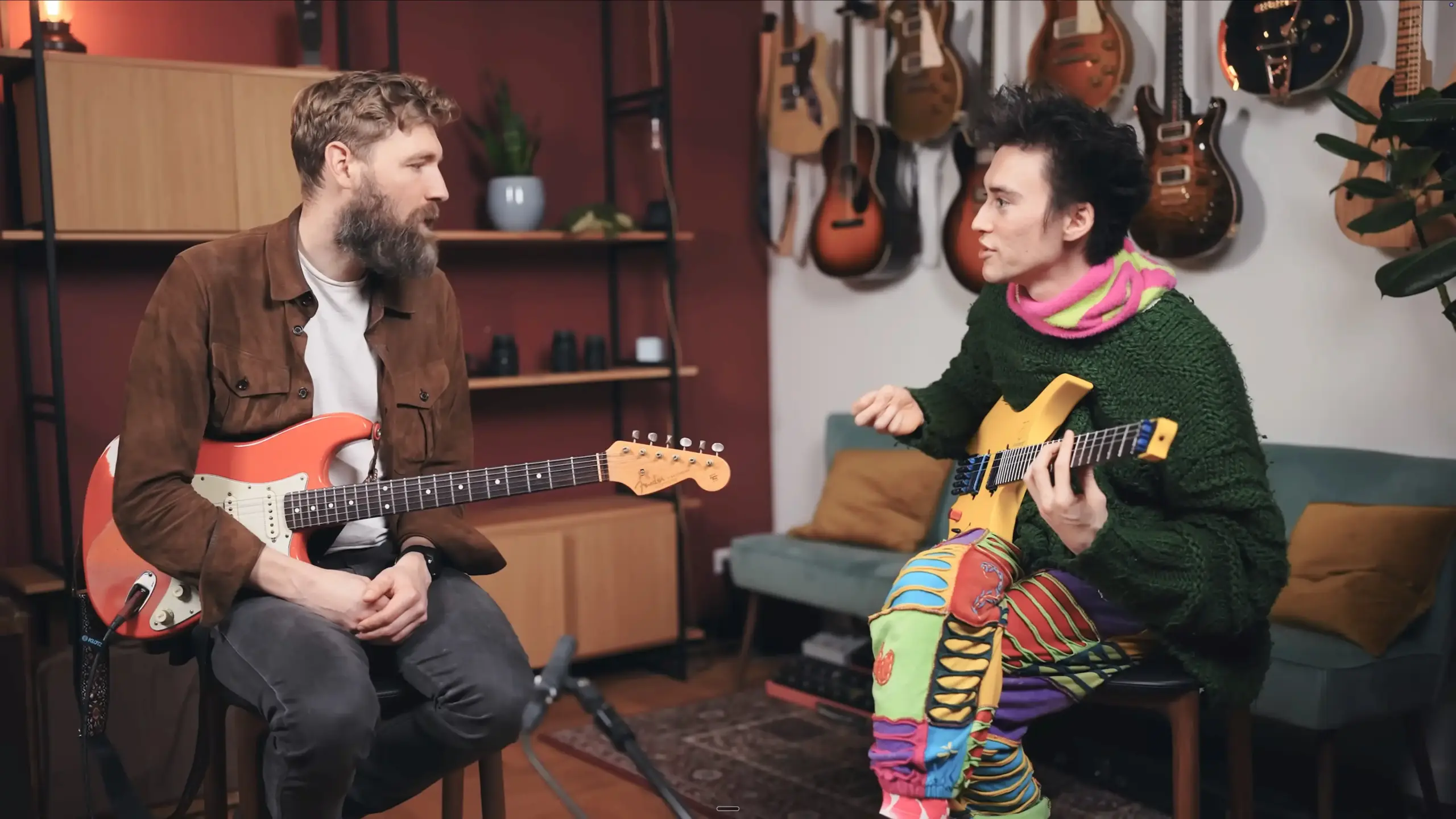
Jacob Collier and Paul Davids discussing Collier’s five-string guitar design. Photo: Paul Davids.
We have a name for this in Baseworks. We call it sensory resolution: how finely you can tell apart what you’re sensing. A beginner feels their back as one thing. With practice the same back becomes many parts, each doing something slightly different, and they start to feel the relationships between them. Same back. Higher resolution. Collier’s off-tuned string and Angine de Poitrine’s micro-tonal intervals are the same capacity, aimed at sound instead of the body.
Interestingly, the anonymity does something similar for the listener. Take away the band’s faces, their history, their names, and you take away everything an audience usually layers on top of the music before they’ve even heard it. No reputation to measure the songs against. No image to read them through. What’s left is the work, and a room full of people paying attention to it.
Outside of music
The same thing happens with a constraint in architecture, though with a building you see the result, not the process that made it. The buildings I find most captivating are usually the ones shaped by a constraint: an awkward site, a steep slope, a tight budget, where the limit pushed the architect toward a solution they’d never have reached on an open field with no rules. Many architects sketch loosely by hand to let the hand find a shape the planning mind wouldn’t propose, and to recognize it once it’s on the page. The thinking comes second. The discovery comes out of the doing, and often out of the constraint itself.
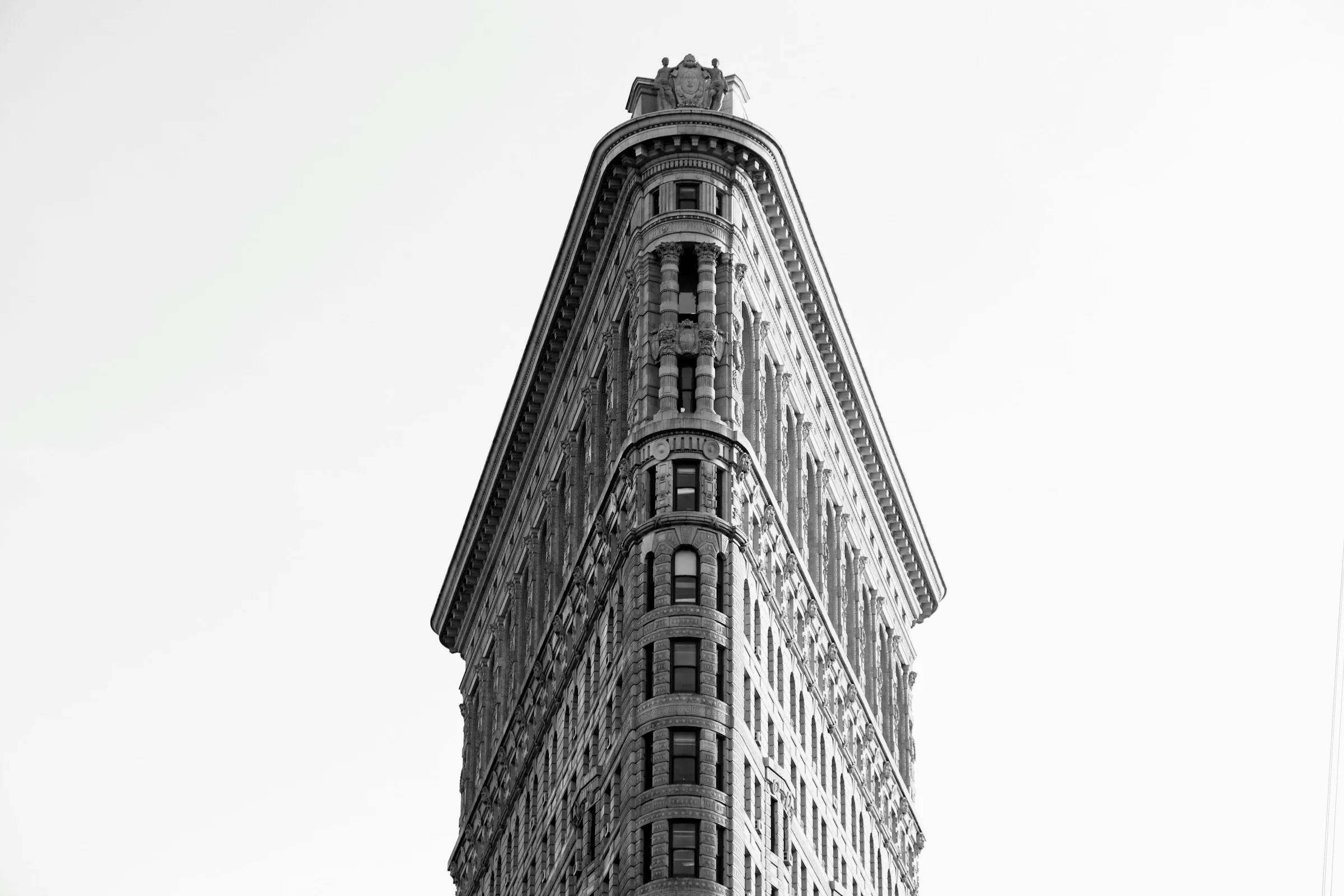
The Flatiron Building, New York City, completed in 1902 on a wedge-shaped lot at Fifth Avenue and Broadway. Designed by Daniel Burnham, its triangular footprint narrows to just six feet across the tip, and skeptics who dubbed it “Burnham’s Folly” doubted it would survive the wind. Photo: Alec Cutter.
What only physical practice opens
There’s a nuance here I don’t want to skip. Going deep in any practice (music, sport, a craft) gives you something that carries across all of them: patience, a certain quality of attention, a sense of how to learn. If you have that from years inside one discipline, you might read everything above and decide you’re covered.
Physical practice gives you that, and something more. Every example so far reaches for something outside the body, and that something isn’t always there. The song isn’t in the silence. You aren’t cycling when you’re off the bike. The building stands whether or not you’re inside it. The body is different. It’s there the whole time, and you can’t switch it off. When the practice turns attention onto the body itself, it works on the capacity to perceive, not on any one thing perceived.
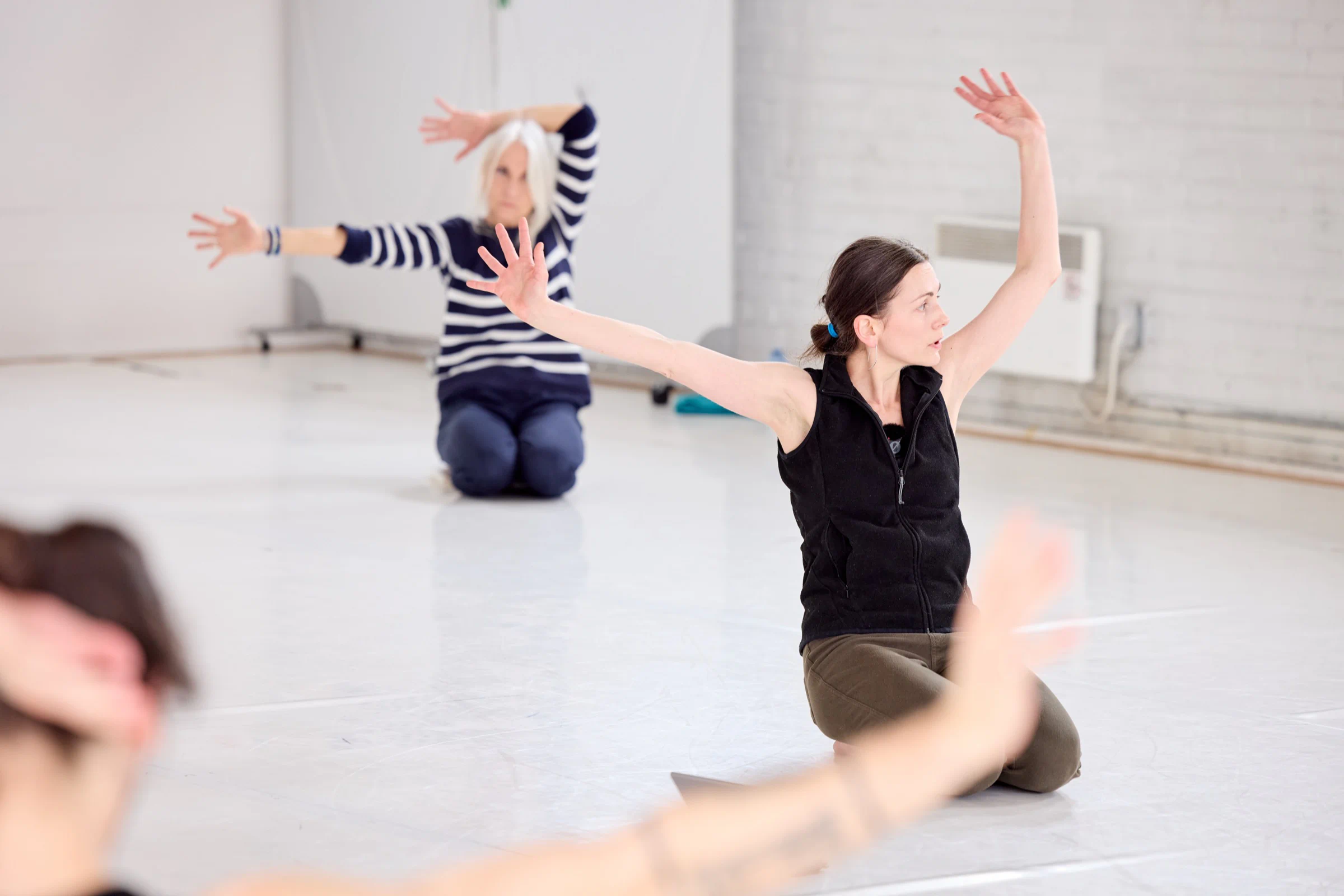
Ksenia Asia Shcherbakova leading a guided form practice session in a Baseworks Study Group. Photo: Andrew Miller.
You can be a brilliant musician and still live mostly through your eyes, with your body as the thing that carries you to the piano rather than something you feel from the inside while it works. That sense of the body as an instrument you read, and not only operate, doesn’t transfer in from another field. It has to be opened on its own terms, and physical practice is how you open it. The shared part, you may already have. This part you have to go and get.
What the practice is for
When I started developing Baseworks, it was never about building something that would impress people.
I recognize that in the way Jacob Collier talks about practice. In that same conversation about his guitar, he’s asked whether he practices much. He says he does, but he doesn’t think of it as practicing. He calls it deep experimentation. He’s led by his curiosity more than by any disciplined regime. He’ll sit for ten hours finding every chord that holds a single shape, not to drill it, but to see what’s in there. He even says one of the best gifts you can give an audience is to admit you don’t quite know what you’re doing, and then go and find it. You do your best work on the edge.
Not everyone works the way Collier does. He already knows to build those conditions for himself, and to go looking for something that doesn’t have a name. Most people never get shown that it’s there to look for. What I wanted to build was an environment that would put that challenge in front of people reliably: a simple task, repeated often enough that it could show them something they hadn’t perceived before. Sometimes what surfaces is physical. Sometimes it’s a kind of clarity that isn’t physical at all. Sometimes it changes how a person organizes a problem in their head. None of that was promised. It emerged, the way it had emerged for me on the bike, on a board, and on stage, from doing the thing and paying attention while I did it.
The movements we use look simple. Getting past that is the first task. If a movement seems too basic to bother with, that impression is usually the gap itself: you can’t yet perceive what the movement is actually asking for, so it reads as nothing. If it feels difficult or hard to grasp, that difficulty is the useful part. It’s showing you where your perception runs out. There’s a lot of value in staying right at the edge of what you can sense and control.
Then the movement turns out to be hard, and that’s where most people stop. The more interesting move is to find the version of the task that’s workable right now, in the body and state of mind you actually have today. That’s the capacity the practice is building: knowing how to adapt. In Baseworks, the biggest success is learning to moderate the intensity on the fly, or to change how you’re approaching a movement the moment it stops working. Sensing at a higher resolution is what makes that possible: you can only adjust to a limit you can feel. It runs the other way too. Sometimes you have to ease off before you can feel anything at all. Backing off is what lets the quieter signal come through. A lot of what we do is help people see easing off as central to the practice, not a step back from it.
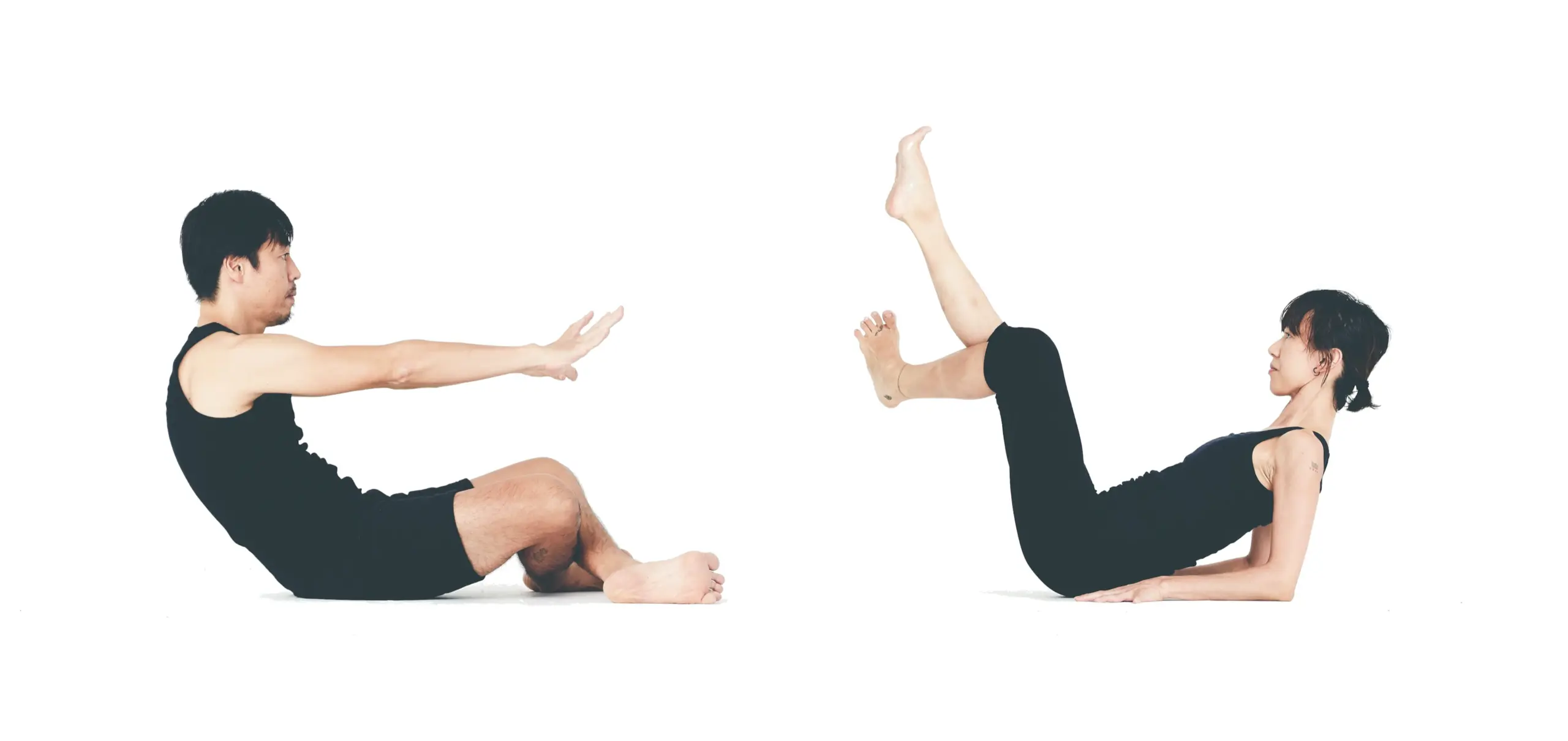
Baseworks facilitators Ken Nakagawa and Shinobu Nakano in two phases of a reclining transition, the combined movement pattern connected to the form they’re practicing, where its principles, patterns, and modifications come into focus. Photo: Nicci Keller.
This is the hardest thing to convey, and it runs against most of what we’re taught. We’re given fixed standards to measure ourselves against: the body we’re supposed to have, the pace we’re supposed to progress at. The practice offers a different reference point. You work within your actual capacity, you get more precise about where that capacity is, and it grows from there.
Look back across all of it and the same thing keeps resurfacing. Something loud quiets down (the effort, the performance anxiety, the obvious notes, the mirror) and something subtle comes forward that was there the whole time. On the bike it was the texture of the road. On stage it was the song. In the music it’s the space between the notes. What the practice builds is the ability to notice that shift, and to stay with what it opens instead of reaching back for the louder, more obvious signal.
A movement practice doesn’t have to be only about health, or staying well, or getting good at the movements. It can be where a person starts to shape a practice around the whole of their own life: their history, their morphology, the seasons and the cities and the cultures they move through. That’s the part I find most interesting. It always has been.
 Apple Podcasts
 Spotify
 Overcast
 Castro
 Amazon Music
 CastBox
 YouTube
 RSS
RSS Goodpods
 iHeartRadio