
What I keep noticing across disciplines
I’ve dedicated a lot of time to learning different skills throughout my life. It started with sports and continued through music and other disciplines that all demanded a lot of focus. In parallel, I’ve worked directly with thousands of people in person at our studio in Tokyo and workshops in other countries. Across everything, one observation has stayed consistent in a way that’s always been obvious. Most people doing physical practices are focused on what it looks like. The body becomes something to manage from the outside, tracked through what the practice visually presents, what it accomplishes, what the aesthetic result of the effort is. The shape, the achievement, the thing you can point at. What’s actually happening internally sits in the background or doesn’t register at all.
The pull toward the visual is reinforced almost everywhere. Open Instagram or TikTok and a substantial portion of what circulates is physical performance eye candy. Fit and agile bodies. Skills executed at a fast pace. The internal experience of what the person feels like from the inside isn’t part of what gets shared, because it can’t be photographed. The visible has gravity, and more often than not shapes both what people look for in a practice and what they consider to be valid.
This isn’t a critique of physical practice. The forms of activity that emphasize visible outcomes have value. What I’m pointing at is a quieter observation that becomes harder to ignore the longer you spend in a teacher/practitioner type of collaboration. The focus on internalization is rarely included in a meaningful enough way in the structure of most pedagogical environments. There’s no obvious reason it would be. Strength, flexibility, and technique all produce results that someone else can see. Inner attention doesn’t. It doesn’t show up in a photograph, and it doesn’t translate into the categories most physical practice is organized around. So it gets left out, even by disciplines that respect what it means.
If you want to test what internalizing sensations feels like, there’s a useful place to begin that most people have never checked.
A muscle at rest, and the vocabulary problem
What does a muscle feel like from the inside, when nothing is happening to it?
Not when it’s sore. Not when it’s stretched. Not when it’s burning from effort. Not when it’s loaded. Just at rest. Sitting there. What’s the sensation?
For most people, the honest answer is nothing. The signal isn’t absent. The attention to detect it hasn’t been built. Muscular sensation at rest is a perceptual territory that almost no part of mainstream movement education touches, and the result is that an entire layer of internal information sits unused in most people’s experience of their own body until they die.
Look at the words available for muscular sensation. Sore. Tight. Stretched. Burning. Cramped. Fatigued. Each of them describes some event the muscle is responding to. For many, the sensory vocabulary for muscles is entirely event-based. If nothing is happening, there’s no word for what’s there. The vocabulary problem and the perceptual problem reinforce each other. Without the vocabulary, there’s no attention on it. Without attention on it, no language develops.
This is a perceptual blind spot, not an absence. Over time, some people find a quiet, neutral presence that was there all along. In her research, Ksenia Asia Shcherbakova has been calling this the hum: a low-grade tonic sensation present in resting muscles, intensifying proportionally with even mild contraction. It’s a perceptual finding that sits outside existing scientific frameworks. That’s why it’s mostly unnamed in the literature she’s been investigating for several years.
The hum, or whatever you find when you check, becomes available only when inner attention has somewhere to show up. The first time, most people find silence. Over time, the silence starts to fill in.
Sensitivity is what’s actually being trained
A muscle at rest is the most overlooked place to start. The signal is so subtle that almost nothing else in daily life prompts you to look for it. There’s no soreness to manage, no stretch to lean into, no burning to outlast. The only way the signal becomes available is through sustained attention, without any external reward.
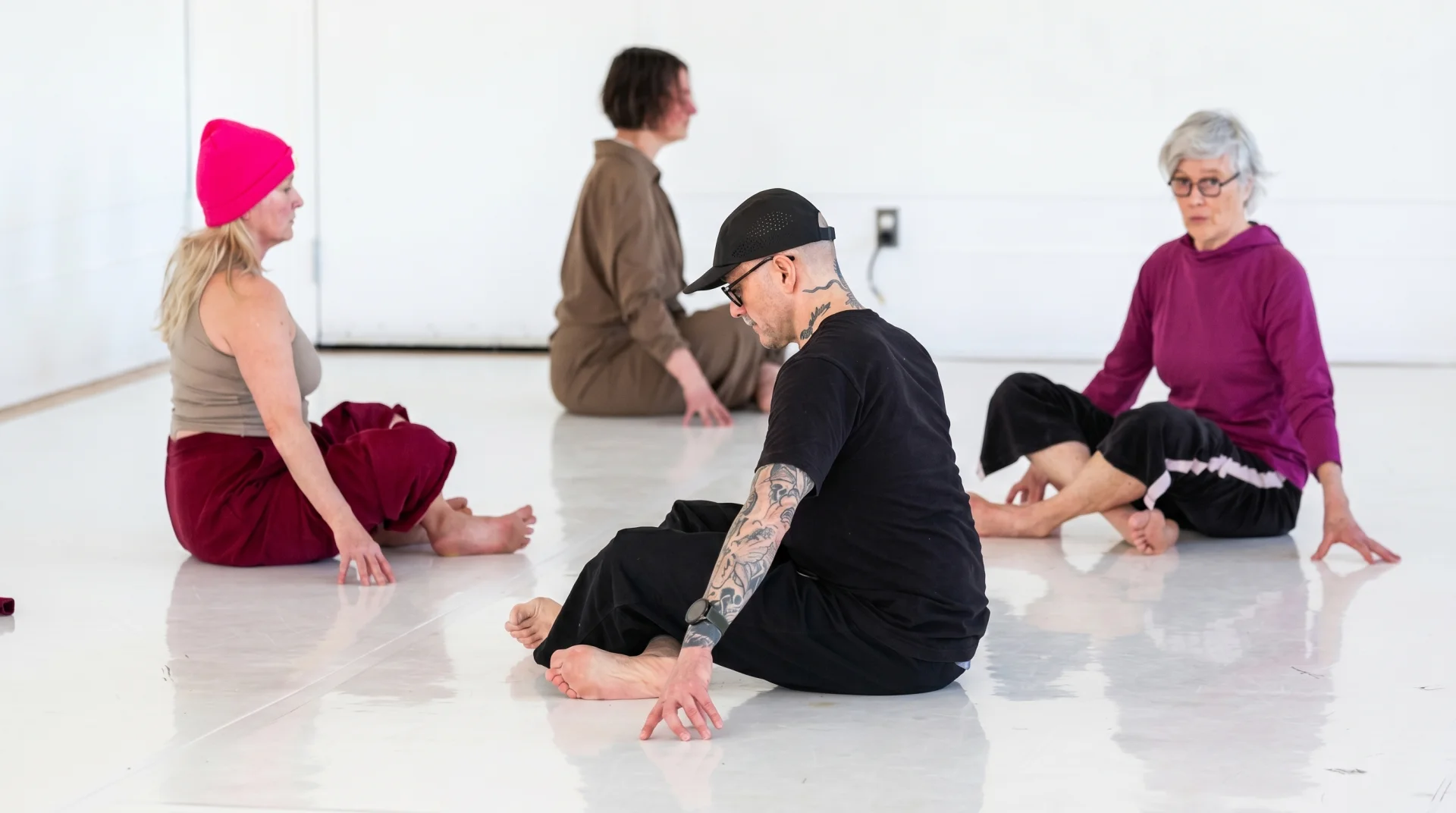
Internalizing this attention is the actual skill. The muscle is its training ground.
What develops over time is what we call perceptual resolution: a finer-grained capacity to detect distinct internal sensations and hold attention on them long enough for something to register. The perception-gap makes a parallel case from a slightly different angle, framing it as sensory resolution that develops through structured practice. The two ideas describe the same underlying capacity from different sides. Perceptual resolution is what changes. Inner attention is what builds it.
Two specific techniques in Baseworks generate the sensory information this kind of attention can work with. Micro-Movements, the subtle positional adjustments used as calibration mechanisms, keep the body engaged with continuous internal signals. Distributed Activation, the simultaneous isometric engagement of multiple muscles in conscious co-contraction, amplifies proprioceptive input across the body at once. Both are structured ways of internalizing attention.
These techniques allow attention to be developed deliberately, over time, in a domain where the signal is subtle, the feedback is internal, and nothing external rewards you for paying attention. A capacity built without external reward is one that doesn’t depend on external reward to be applied later, in any other domain.
How that sensitivity builds across domains
The capacity being trained doesn’t stay confined to the body. It carries. There’s a good term for this: attentional carryover. A perceptual skill developed deliberately enough in any domain becomes accessible in others.
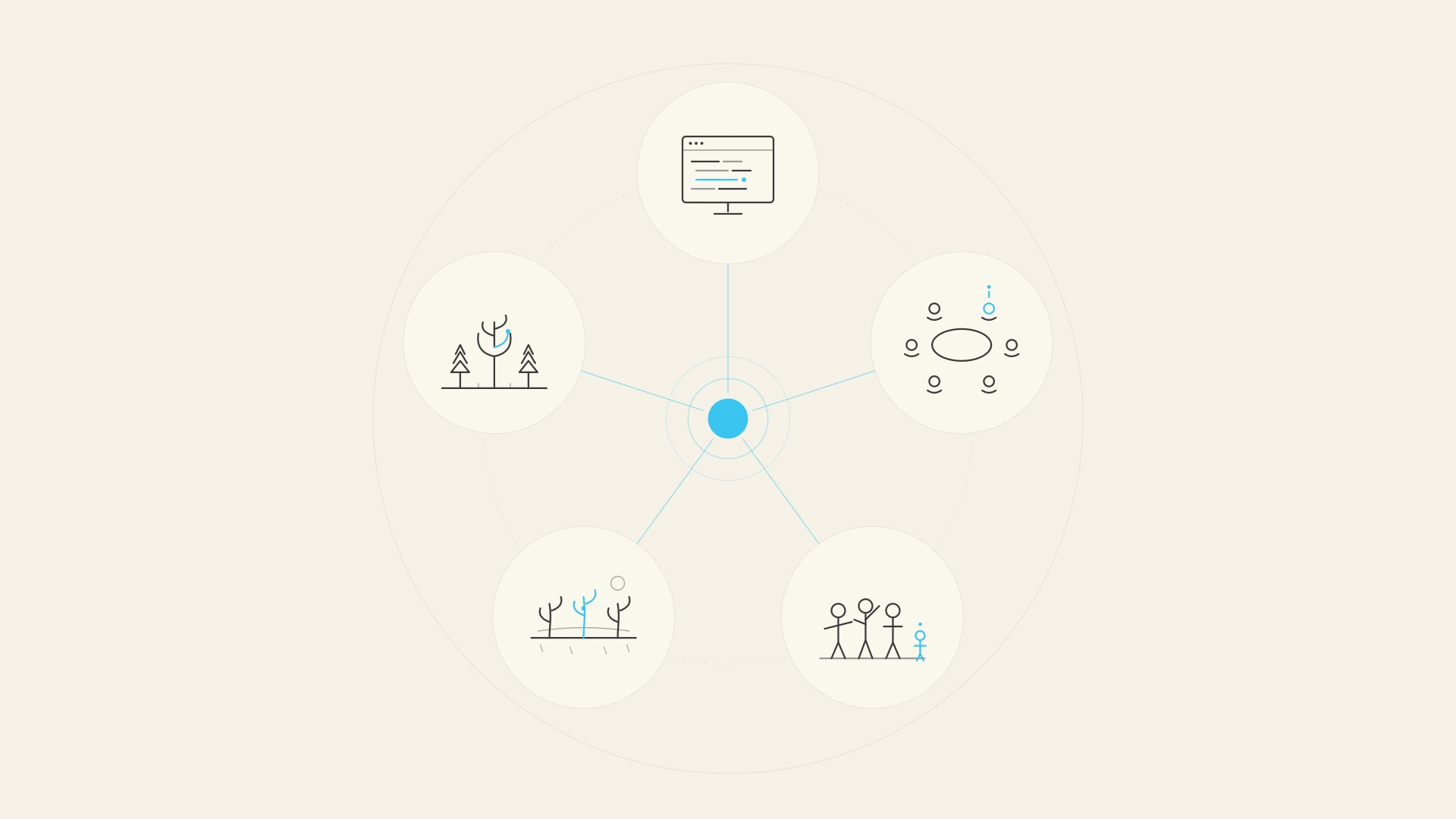
A software developer reads code more carefully, catching the small inconsistency that would have become a bug. Knowledge of the codebase isn’t usually what makes the difference between catching it and missing it. The difference is whether attention stays on a passage that doesn’t look like it needs scrutiny on first read.
A CEO senses temperature in a room before deciding how to open a meeting. The information was available to everyone present. The attentional capacity to register and use it is what separates the decision that makes itself obvious from the one that misfires.
A preschool teacher notices which child has gone quiet in a way that’s different from yesterday. Nothing obvious has happened. The signal is small enough to miss, and missing it has consequences that a stronger external cue would have prevented.
A farmer reads the soil and the weather and the look of a crop as a single ongoing pattern, not a checklist. The early indication of a problem is rarely a single event. It’s a slight shift in something easy to overlook, picked up by a person whose attention has been trained over years to register changes most people would walk past.
A forester picks up the early signs of a tree under stress before they’re obvious to anyone else. The skill isn’t taxonomic knowledge alone. It’s the capacity to keep noticing.
These are all instances of the same underlying skill. Sustained attention on signals that aren’t shouting for it. Most of what matters in any field sits in that category. The obvious things take care of themselves. The subtle ones need someone whose perceptual range has been trained to notice them. And there are very few domains in modern life that train this kind of attention deliberately. Physical education, when it’s oriented toward inner attention rather than external outcome, is one of them.
The science underneath
The experiential side of this work is what I’ve laid out here. There’s a research side as well, and that’s where Ksenia Asia Shcherbakova comes in. We met in Tokyo in 2015. After her first month of practicing with us at the studio, she agreed to join the team as a research associate, with the role of mapping the outcomes of Baseworks onto the natural sciences. Since then, her contributions have included research, the creation of educational materials, and a number of articles that connect the practice to the underlying science. One of those articles, The Mystery of Proprioceptive Awareness, covers the neural mechanisms behind muscular sensation at rest, the original survey data showing how widespread this perceptual phenomenon is across practitioners, and the structural reasons it has gone largely unnamed in existing scientific literature on proprioception.
If you’d like to dig a bit deeper into the concepts and research in person, there are two upcoming opportunities:
- May 11, 2026, Montreal. Asia presents at the 27th Neuropsychology Day at The Neuro (Montreal Neurological Institute). Her presentation is on degrees-of-freedom control and predictable failure patterns in non-habitual movement. Free and open to the public.
- June 8 to 9, 2026, Padova, Italy. We’re presenting related research at BRNet 2026, to the body representation research community.
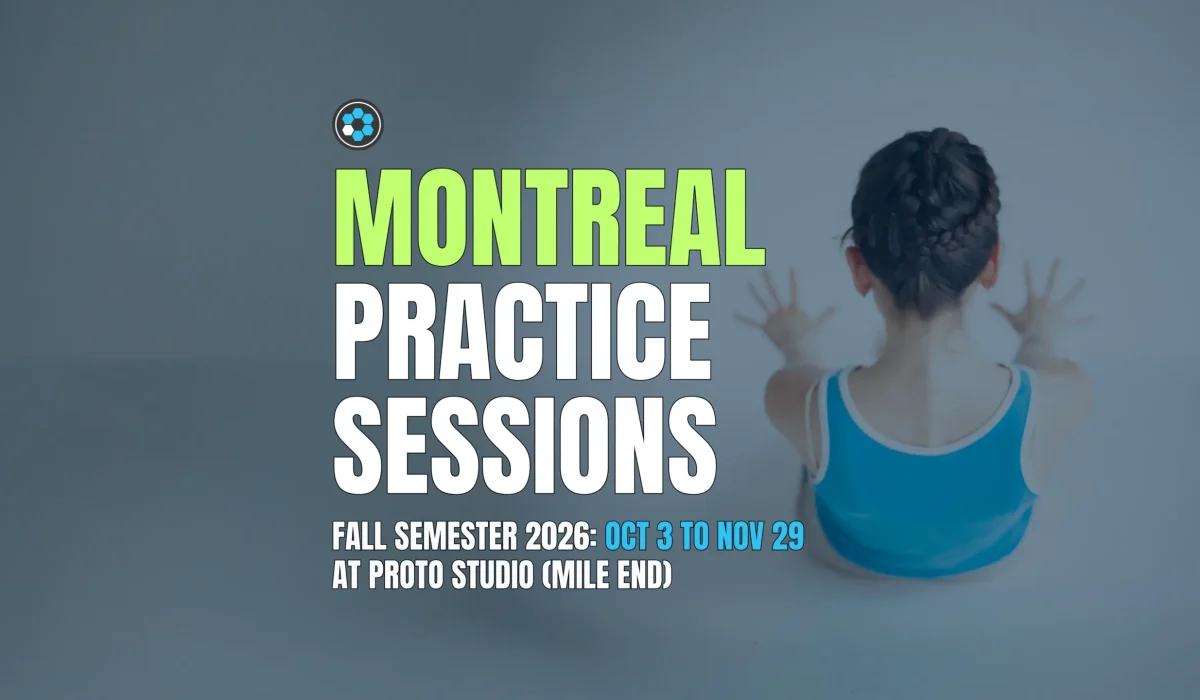
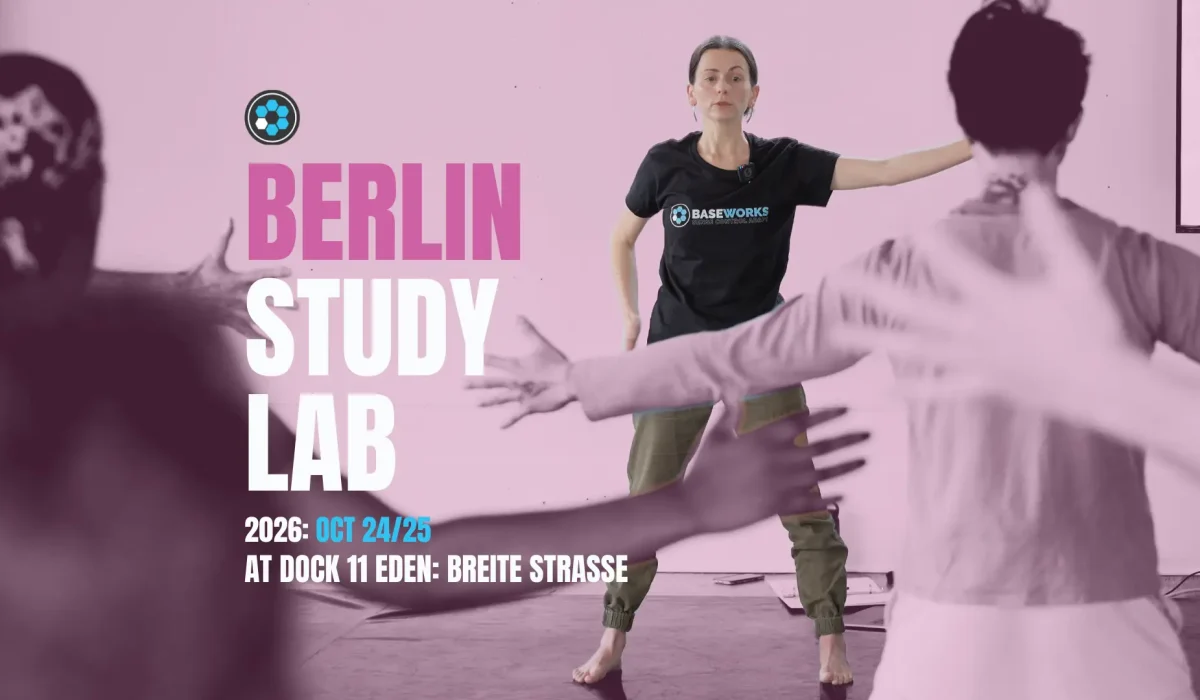
To experience the practice itself in person, our events page lists upcoming sessions, and the Primer program is the structured entry point for working with the method.


 Apple Podcasts
 Spotify
 Overcast
 Castro
 Amazon Music
 CastBox
 YouTube
 RSS
RSS Goodpods
 iHeartRadio