
What the Winter 2026 cohort in Montreal looked like, what participants reported, and what we observed.
The Baseworks Method grew out of my experience building the programming at our studio in Tokyo. I opened the studio in 2004 as an interdisciplinary space. Over time, the approach that would become Baseworks emerged as the central focus. From around 2010, the schedule progressively became exclusively Baseworks, with classes running from early morning to late evening, seven days a week. Over a hundred teachers were trained; a core group of about ten worked together for nearly a decade, teaching thousands of students within the same framework. That density of daily operation made iterative refinement possible: the method was developed, tested, and clarified across all of those people. When the same system runs every day with that many teachers and students, the methodology has to be precise enough for everyone to understand and reproduce. That requirement shaped the method into what it is today. In the process, the method developed features that are deliberately counter-intuitive — the practice is organized around surfacing and recalibrating automatic motor patterns. That’s what makes the learning context matter.
Alongside the daily schedule, we ran master classes — ninety-minute sessions focused on the conceptual depth of the method. The sessions were structured to highlight the kind of sudden perceptual shift where understanding became physically tangible. Identifying the conditions that made those moments possible is a part of what our Primer Program was designed for.
When the pandemic suspended in-person activities in 2020, the first priority was continuity. We built the Practice Platform — a practice app that gave our existing community of practitioners a way to continue their work independently. We also ran virtual programming while continuing to develop the methodology and its tools.
The longer question was whether the method could be made learnable for people encountering it for the first time — without the backdrop of a studio where classes ran every day among a body of teachers transmitting a consistent educational framework. Among the first steps toward answering that question were a series of collaborations in Bucaramanga, Colombia — working with long-time collaborator and contemporary dancer Maria Lucia Agón Ramírez, and with the music and medical faculties at the Autonomous University of Bucaramanga (UNAB). Those collaborations were the first wave of our new educational material, and the experience informed what came next: the Baseworks Primer, a structured introductory course designed to make the method learnable as a standalone educational pathway. The Primer is not tied to any specific in-person program — people around the world study it independently as their introduction to the method.
What we learned from both the Primer and from returning to in-person instruction is that the development runs in both directions. Working with people in person reveals how they engage with the online material — where the preparation carries over and where it does not. Observing how people with different learning approaches study the Primer on its own reveals where the standalone experience needs more structure or prolonged guidance. Each side informs the other. The hybrid formats — the Study Group, a multi-week course, and the Study Lab, a more focused weekend format — grew out of this. The Primer provides vocabulary, conceptual structure, and the ability to study the material at your own pace. Since the practice is largely about noticing and modifying automatic movement patterns, the Primer focuses attention on what would otherwise continue running on autopilot. Guided in-person sessions provide individualized feedback and the kind of understanding that only develops when an instructor can see and correct what is happening in your body. Online preparation carries over into the in-person experience, and feedback from in-person sessions recalibrates the online study.
We’ve also launched virtual cohorts, which bring the guided, cyclical structure of the Study Group and Study Lab into an online setting, with the intention of eventually pointing participants toward in-person programming as well.
Across all of our programming, we use what we observe to refine both what we deliver and how we deliver it. How practitioners engage with the method within their specific circumstances and how group dynamics interact with the material being delivered. These shape the direction of subsequent programming, regardless of format. The first Study Group, in early 2025, was one of those inputs. On the basis of what we learned from that cohort, we made adjustments to the program content, the structure, and the Primer itself, alongside adding new features to the Practice Platform. The Winter 2026 cohort in Montreal, which ran from January 24 to March 1, was the result of that ongoing process.
This article documents what that cohort looked like, what we observed, and what the participants reported. It’s also documentation of how this developmental process is working — whether structured pairings of online study and guided practice can produce the kind of learning that years of daily studio operation made possible.
Who Was in the Room
The Study Group is designed as an entry point. The Baseworks Method doesn’t assume prior experience with any specific discipline, and the Study Group is the format built for people encountering the method for the first time. Other formats like the Practice Sessions are for people who have already developed a distinct understanding of what movement does to perception. That understanding develops in different ways: through practicing Baseworks regularly at the studio in Tokyo, participating in intensives and immersions over the years, completing introductory programs like the Study Group, or through sustained commitment to a physical discipline that has shaped how they perceive and use their body. The Study Group is where that understanding begins to form.
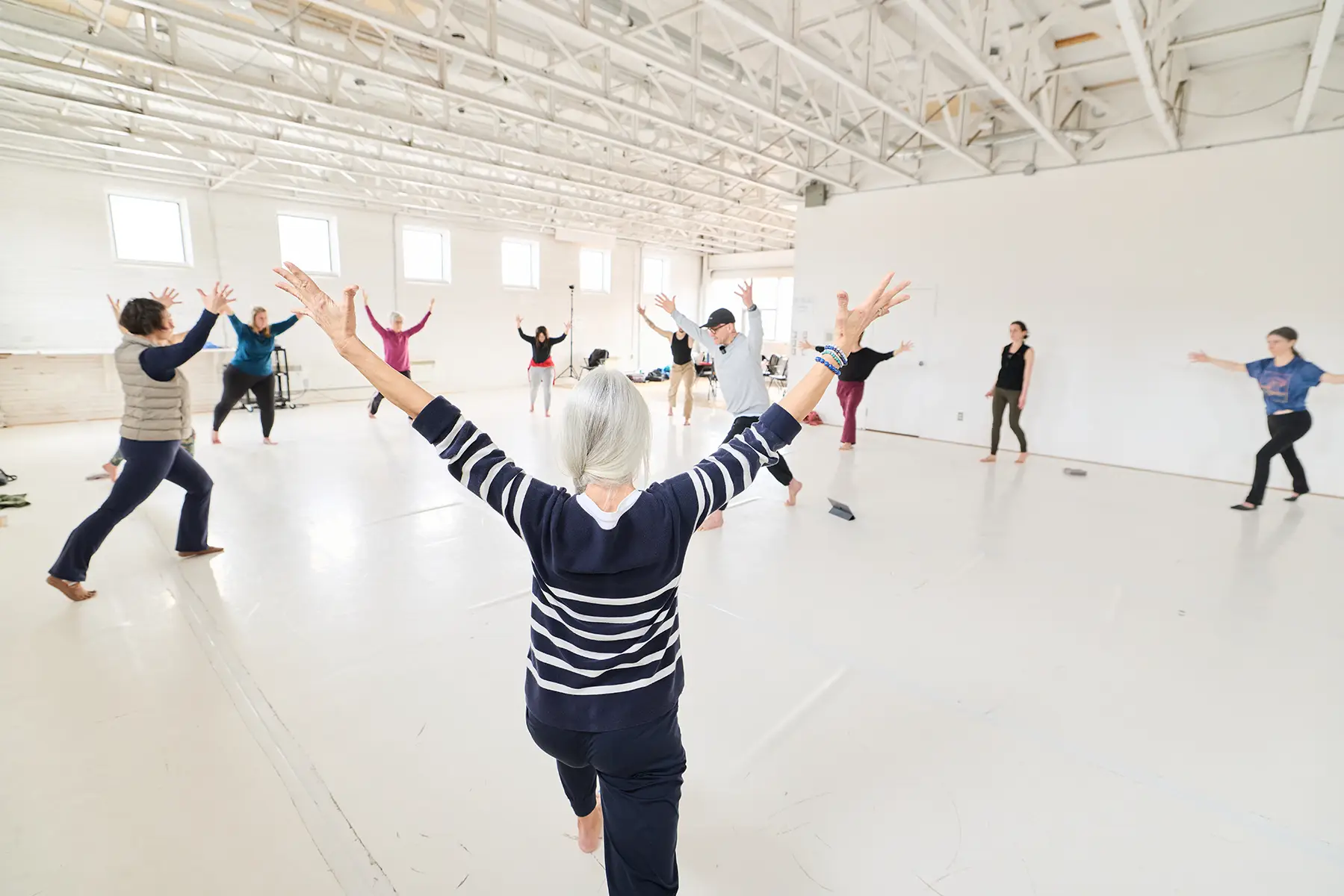
The Winter 2026 cohort in Montreal was a clear example of what that looks like in practice. Twenty-one people. Among them: massage therapists, a preschool teacher, dancers, somatic practitioners, a sociology professor, a visual artist, a writer, and people recovering from injuries, with decades of combined experience across their respective professional, academic, and personal pursuits. What they had in common was not a discipline. It was a curiosity about how attention and movement connect.
They walked into Circuit Est Centre Chorégraphique, a Montreal space dedicated to production and choreography in dance and physical theatre. No mirrors on the wall we were facing. No music. Just instruction and attention. That was the starting point.
How the Study Group Worked
Each week, participants completed an assignment from the Primer before coming to the session. The assignments covered the first five of the Primer’s ten segments, progressing from foundational forms and principles through Intensity Modification and movement transitions.
After the first Study Group in 2025, one of the updates we made to the platform was a Smart Revisit feature. This is a tool that tracks each participant’s progress and suggests previously completed practice lessons to return to. The idea is re-encounter. When you re-experience the same practical task from a new perspective after engaging with new material, it changes what you can perceive in it. It was one of several refinements we made to both the Primer and the platform between cohorts. For this group, it became part of the weekly rhythm alongside the assignments.
By the time participants walked into the room each Saturday, they’d already studied the material. Each in-person session was where it became tangibly physical, with individualized feedback, real-time corrections, and the kind of understanding that only develops when someone helps you realize your pelvis is rotated and you were certain it was straight.
After each session, we posted a detailed summary to the group forum, covering every form, every principle, and every correction made. Participants could return to these between sessions, reinforcing what the in-person work had clarified. As one participant put it: “If we had only done the in-person sessions, we wouldn’t have had the depth that the reading and visual content bring. But being slightly corrected in person orients everything you do online afterwards.”
From Three Forms to Twenty-One
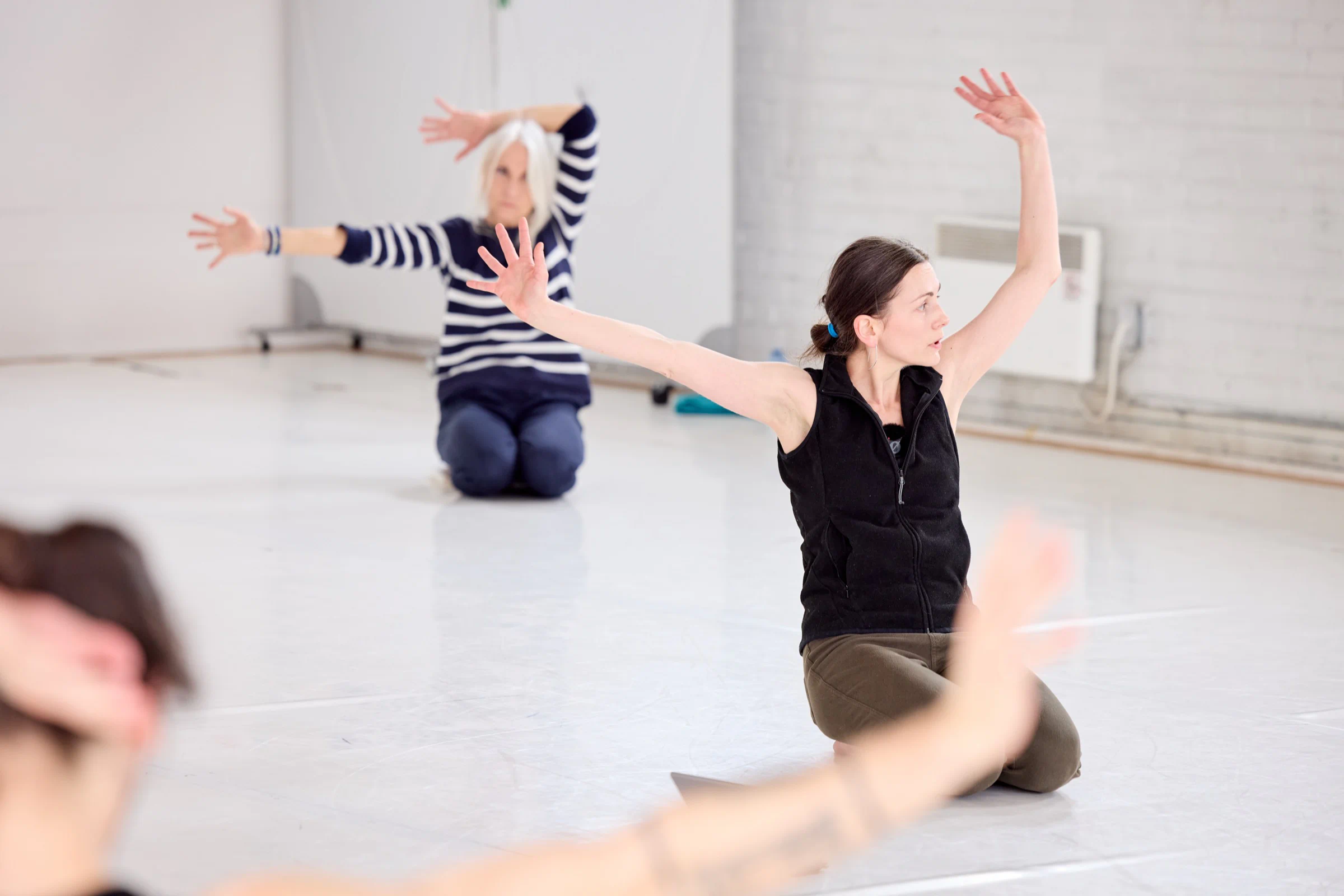
What matters about the arc from Session 1 to Session 7 is not the number of forms learned. It is the shift in how participants interacted with the practice.
In Session 1, the group learned three forms, Squat, Star Form, and Star Tilt, and three foundational principles: Distributed Activation, Micro-Movements, and Gridlines and Symmetry. Every movement was named, demonstrated, and explained. A big portion of the session was spent on a single instruction: draw the shoulders down while keeping the neck relaxed. That level of attention to one detail is characteristic of how the Baseworks Method works. And the precision at the level of individual muscle activation and body awareness, built up systematically over time.
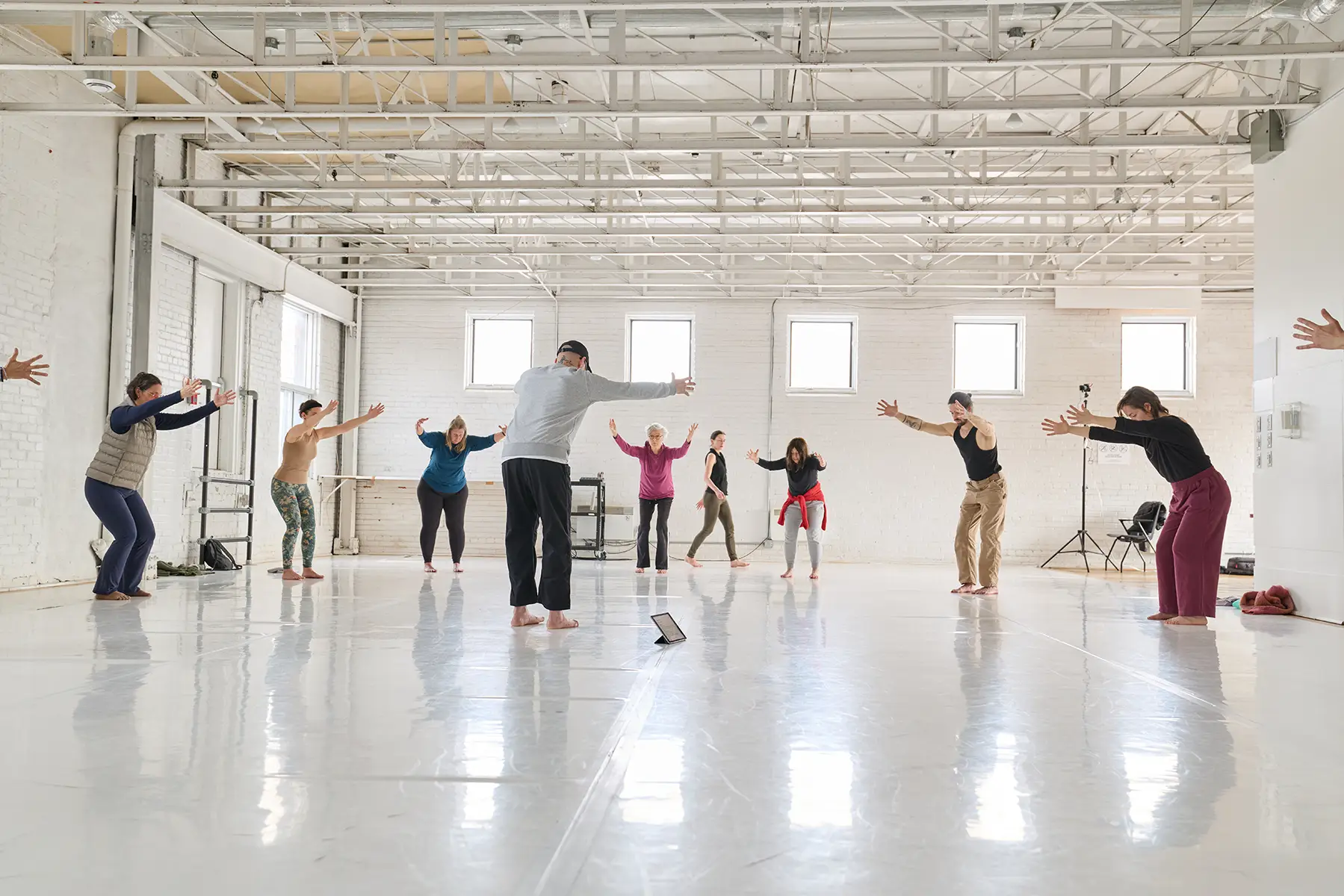
By Session 7, the group practiced twenty-one forms over ninety-ish minutes. After the initial pass through the material, we ran many of the forms a second time with minimal cueing. The group applied the principles and movement patterns from memory. They knew what “Star Form” meant. Not just the physical shape of the form, but the activation patterns, the micro-movements, and the points of attention.
That shift, from needing every instruction named to practicing from internal reference, is what developed over seven weeks. Not mastery. Orientation. The group had internalized enough of the movement vocabulary to engage with the task intentionally, working from the principles instead of the automatic patterns we all default to in daily life.
What Everyone Reported
The study group gave us a concentrated window into how the skills developed in practice carry into contexts outside of the practice itself, through forum posts, session discussions & observations, and post-program interviews.
One person nearly fell on ice during the winter and caught herself mid-slip. She attributed regaining her balance to having internalized weight placement and postural awareness from practice. “I believe I didn’t fall because I was fully conscious of my posture while walking.” This revealed a half-second response, shaped by weeks of deliberate attention to how she held and moved her body.
A movement educator with a yoga teaching background who leads online classes began integrating micro-movements, one of the foundational Baseworks Key Principles, into her sessions the day after her first Baseworks class. Teaching a group she had worked with for years, she noticed almost immediately that participants were more focused and that their balance had improved markedly. She attributed these changes directly to the Baseworks principles she had introduced.
Another participant recovering from a pelvic fracture found that the Intensity Modification framework (the Baseworks approach to moderating effort without compromising form), gave her a way to practice without guessing at her own limits. She described the cumulative effect in this way: “There is a new design of the body after each session. I don’t know how else to say it.”
Another participant arrived uncertain about the purpose of the practice. After the first session, she noticed she was drawing her shoulders down when she was walking and realized she had never understood how to achieve the postural corrections her chiropractor had been recommending for years. She now describes Baseworks the same way we described it to her on day one: “It’s about understanding your body.” The difference is she now knows what that means. She can feel it, apply it and use it. It went from being a concept to being something her body understands.
What We Observed
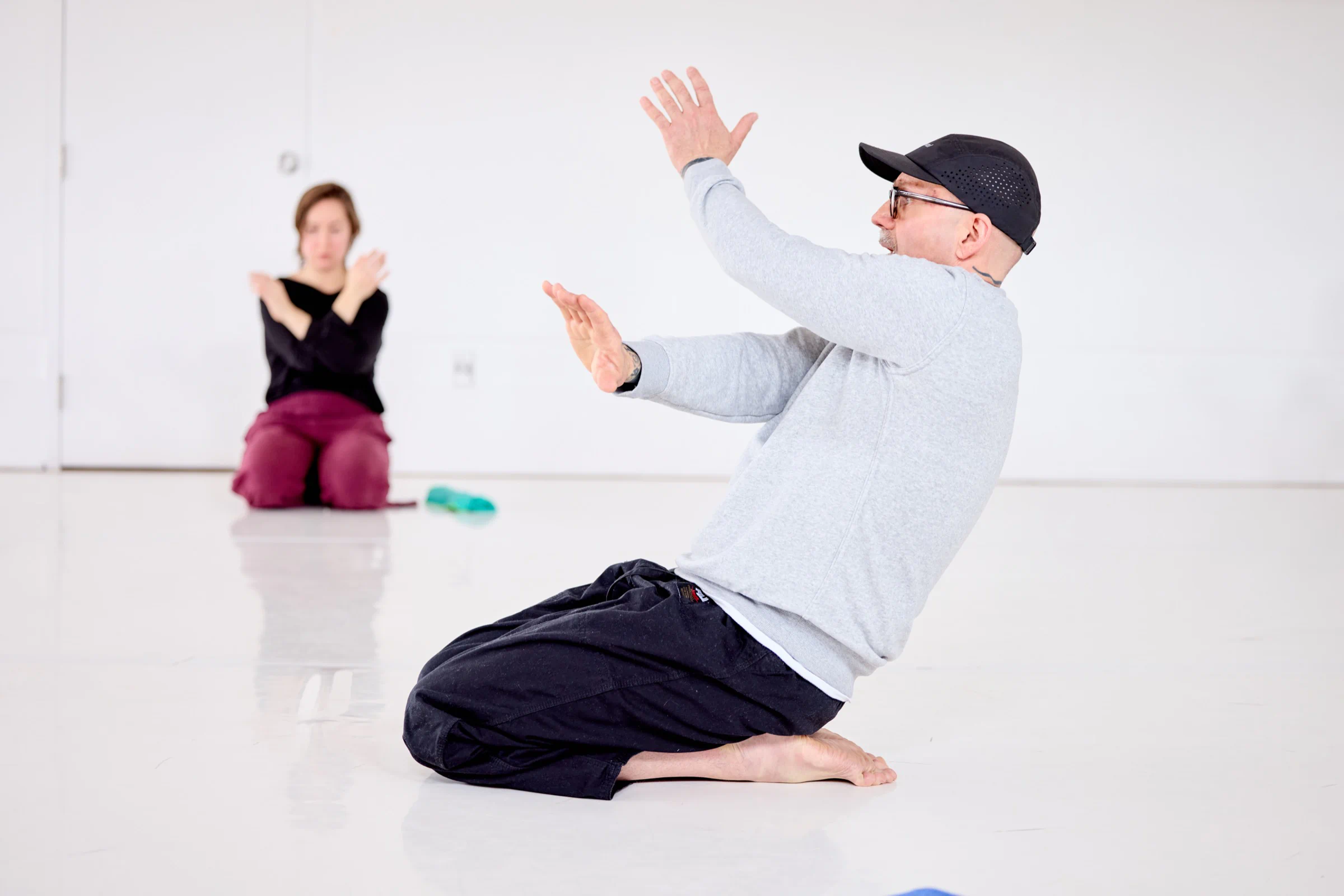
Beyond what people reported, there were patterns across the group that we found consistent enough to note.
A massage therapist, a dancer, and a sociology professor all started from the same foundational principles. The diversity of physical backgrounds didn’t create confusion. It created a shared starting point. The cohort’s questions on the forum became increasingly precise over the seven weeks, a shift from “how do I do this form” to “I notice this specific activation pattern when I do this, is that correct?” And several people (independently and without prompting) reported shifts in perception outside of practice: postural awareness during daily activities, changes in movement quality, and heightened attentional capacity in contexts unrelated to the practice itself.
These are all observations, not clinical outcomes. The kinds of perceptual and functional shifts reported here are consistent with what we’ve observed over nearly two decades of developing and teaching these same applications. They are also the kinds of observations that need more data, more cohorts, and more time. The signal was consistent enough to notice, and we’re continuing to document it.
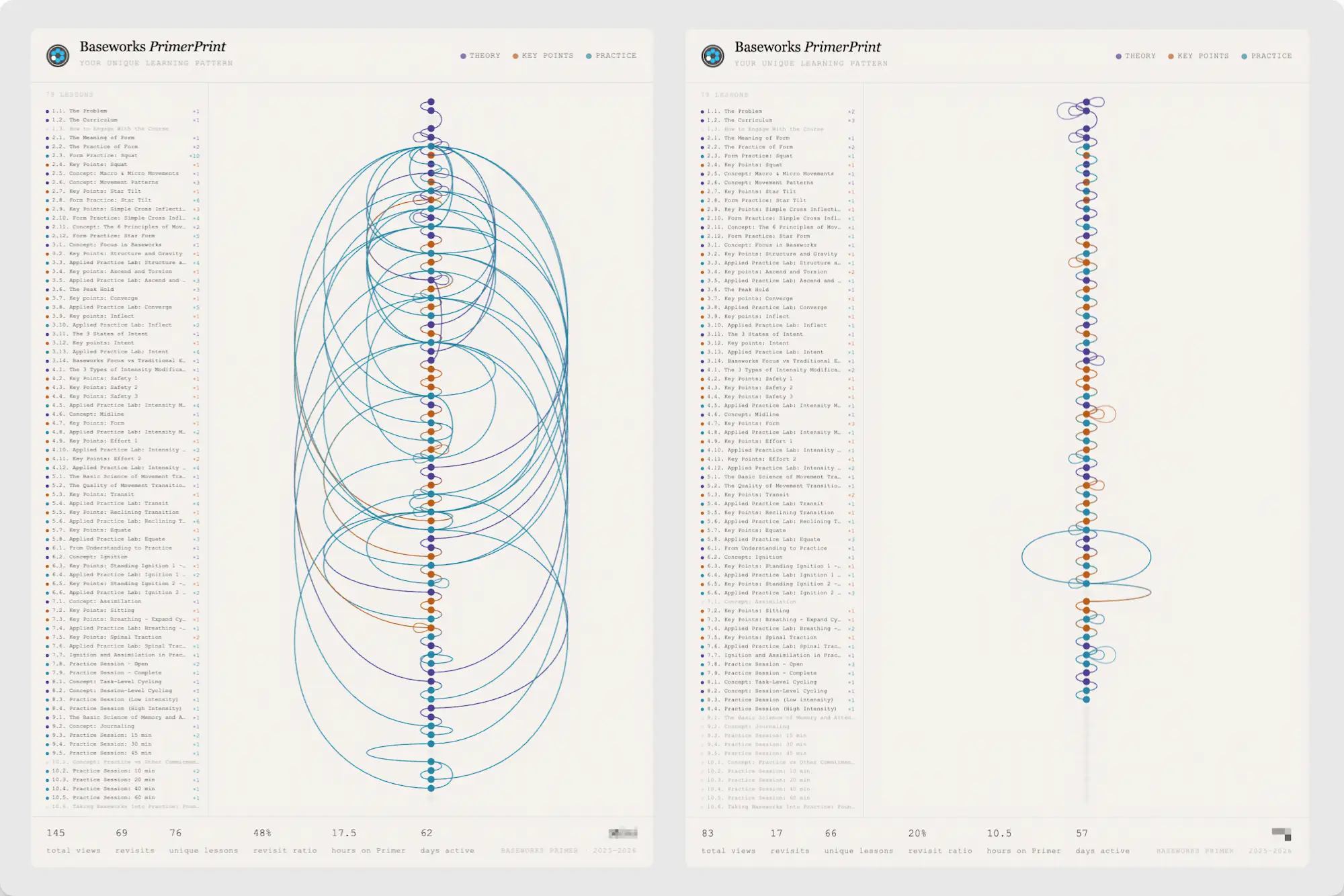
Among the many things that stood out to us from this cohort was seeing how differently people engaged with the Primer. Some followed a dedicated linear path through the material without much revisiting. Others made extensive use of the Smart Revisit feature, returning to earlier lessons repeatedly as they progressed. That variation inspired us to develop the PrimerPrint, the newest addition to the Practice Platform, now available to anyone taking the Primer course, past, present, and future cohorts.
The PrimerPrint is a visual representation of each person’s actual engagement data across the entire program. When participants make use of Smart Revisit to return to earlier material as they progress, the PrimerPrint captures that non-linear path. Every revisit, every jump between segments is mapped as a continuous thread. We called it a “print” because, like a fingerprint, each person’s path through the practice becomes unique. How someone learns, what they return to, and where they spend their time, reveals itself as an individual process as the person practices.
We look forward to working with every new group of people across our developing programs. If anything here resonated with you, please feel free to send us a message.
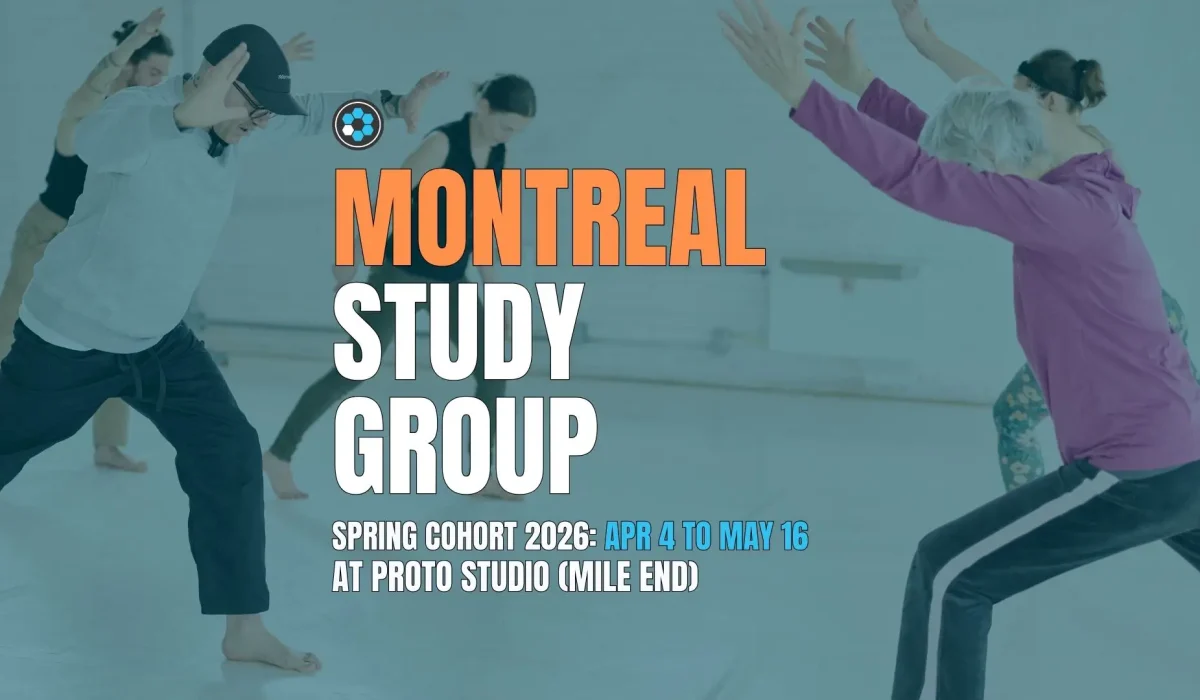
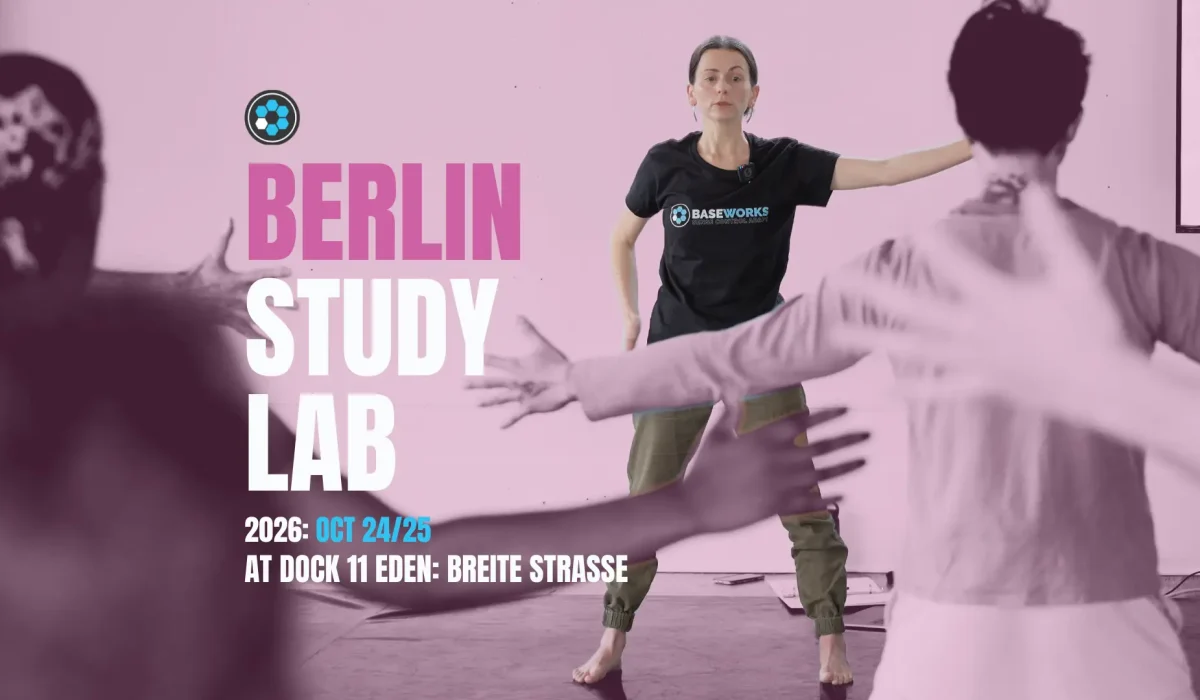
The Spring 2026 Study Group begins in April at Proto Studio in Mile End.
 Apple Podcasts
 Spotify
 Overcast
 Castro
 Amazon Music
 Anchor
 CastBox
 Radio Public
 Breaker
 YouTube
 RSS
RSS Goodpods
 iHeartRadio